
Information service of the Pontifical Mission Societies since 1927
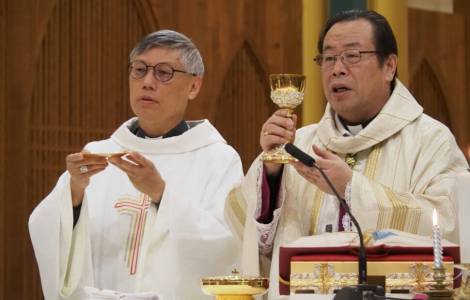
photo Hong Kong Diocese
by Marta Zhao
Hong Kong (Fides News Agency) – The present and future journey of the synodal Church in Hong Kong; satisfaction at the growing number of bishops ordained in China within the framework of the Provisional Agreement between the Holy See and the People's Republic of China on the appointment of bishops; particular concern for relations with mainland China and for relations between the Church in China and the Holy See, approached always in the spirit of a “bridge-builder” and a “messenger”, also taking advantage of his numerous engagements in Rome; the contribution of young people, women and even children to the life of the Church; relations with believers of other faiths and with atheists; the need to overcome clericalism, as well as to work for peace and engage with the challenges posed by artificial intelligence: are just some of the many topics addressed in an extensive interview given by Cardinal Stephen Chow Sau-yan, SJ, Bishop of Hong Kong, to the diocesan publications Sunday Examiner (in English) and Kung Kao Po (in Chinese), ahead of the fifth anniversary of his episcopal ordination, celebrated on 4 December 2021.
“Crossing the river by feeling the stones”
The Cardinal looked back on his episcopal ministry with insight and humour. He recalled that, five years ago, he had no grand plan for the future. Instead, as he put it, he was “crossing the river by feeling the stones” – a saying commonly attributed to Deng Xiaoping, reflecting a cautious, pragmatic and realistic approach.
Today, however, the Jesuit Cardinal says that he is walking together with brothers and sisters through shared discernment and listening, in order to contribute to the building up of the Church through a participatory and synodal spirit.
At the beginning of his episcopal ministry, Bishop Chow said that he wanted not only to build bridges but to be a bridge himself. “I am grateful that this is actually happening,” the Cardinal acknowledged. He added that before taking any action, he always asks himself one fundamental question: “Am I at peace before God?”
As a Cardinal, he feels an even greater responsibility to foster communication between China and the Holy See, at times also acting as a messenger in order to promote “human dialogue”, in the hope that “exchanges may become clearer and more open”.
The China–Holy See Agreement and its developments
He expressed satisfaction at the growing number of bishops in China, following the implementation of the Provisional Agreement on the appointment of bishops, which has made it possible for more mainland bishops to attend international meetings in Rome.
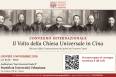
As a significant example of this positive development, he cited their participation in the Synod and in the conference marking the centenary of the episcopal ordination of the first six Chinese bishops, held on 5 November at the Pontifical Urbaniana University in Rome. The conference was also attended by Joseph Li Shan, Bishop of Beijing, with whom Cardinal Chow shares a strong personal bond.
Dialogue that paves the way
Cardinal Chow reiterated that official and regular exchanges with mainland China must continue, though they require careful preparation and time because of the complexities involved.
At the same time, he stressed the importance of recognizing the “more natural and more human side of dialogue”, rooted in interculturality and mutual sharing. Greater mutual understanding, he said, naturally fosters greater trust.
“With more trust and more cooperation, there is a chance to become more open, allowing China as a whole to better understand, our Catholic faith and worldview. With our footing within the country, we can play this role well,” Cardinal Chow said. He added that he would like to increase such visits to mainland China to twice a year.
Real problems and superficial impressions
He acknowledged that the stricter regulatory measures currently imposed on the activities and practices of religious communities in mainland China, including the Catholic Church, can at times cause unease among observers. Nevertheless, the Cardinal is convinced that genuine dialogue requires both sides to look beyond surface impressions and make a sincere effort to understand the context and reasons behind such approaches.
Speaking in English with the Bishop of Rome
Speaking about his institutional commitments within the Roman Curia and his advisory work in Rome, the Cardinal humbly and calmly acknowledged that he speaks neither Latin nor Italian, the two languages traditionally common in the work of the Roman Curia.
He noted that he now communicates with Pope Leo XIV in English, making it “possible to establish a more direct dialogue”. He regards these appointments as “a significant opportunity to place one's expertise in the social sciences, psychology and, in particular, organizational development at the service of the needs of the universal Church”.
Among his priorities, in pursuit of “a synodal Church in the Hong Kong style”, he identified two pillars for the Diocese: formation and evangelization.
He also emphasised the importance of the concrete involvement of young people, women and the laity, as well as children, in the life of the Church. “Young people are not only the future. Young people are the present,” he stressed.
The Cardinal urged to overcome clericalism and the mentality that leads different ecclesial groups to work in isolation from one another. He urged Christians to move beyond the boundaries of their parishes and collaborate with people from different cultural and religious backgrounds for the common good.
On the international front, another issue he intends to address is the relationship between artificial intelligence and psychological and spiritual formation.
Finally, speaking about his daily life, the Cardinal described his ministry not simply as enjoyable, but as “meaningful”.
Referring to the Diocese's commitment towards society, Cardinal Chow emphasized that the Church's decisions must arise from sincere discernment before God, without being influenced by the desire for popular approval or by fear of controversy.
After five years spent building bridges, the Cardinal remains convinced that true peace comes from listening to one's conscience before God, rather than seeking applause or fearing political controversy. The future of the Church in Hong Kong depends on its ability to walk together, listen to every voice, overcome divisions and build a missionary community that remains open to society and dialogue, allowing the Holy Spirit to guide the process of change.
The river, the stones and Deng Xiaoping
The expression “Crossing the river by feeling the stones”, revived by Cardinal Chow, is originally a Chinese popular to describe the idea of “proceeding cautiously, one step at a time” or “moving forward carefully while seeking to maintain a safe position”.
Rooted in popular wisdom, the expression was later adopted in official documents of the Chinese Communist Party to describe a pragmatic approach to policymaking.
From the late 1990s onwards, some authors began associating Deng Xiaoping's political approach with the formula “crossing the river by feeling the stones”. Gradually, the idea spread that it represented a kind of theory developed by Deng Xiaoping. As a result, the expression increasingly came to be regarded as one of his original quotations.
Although there is no documentary evidence that Deng Xiaoping ever uttered the exact words “crossing the river by feeling the stones”, the expression does indeed reflect his realistic, pragmatic and experimental approach, that shaped his policy of reform and opening up, which he repeatedly advocated.
(Fides News Agency, 27/11/2026)



 VATICAN - "Church of Rome, Missionary Church": Cardinal Reina opens the Urbaniana's Academic Year
 VATICAN/MONGOLIA - Leo XIV receives Cardinal Marengo and the abbot of Gandan Monastery, the heart of Mongolian Buddhism
 ASIA/CHINA - New Bishop of Xiamen: “Communion and Mission are at the heart of Church Life”
 ASIA/CHINA - Joseph Liu Hengping appointed Bishop of Xiamen
 ASIA/CHINA - Bishop of Guangzhou calls on Catholics to prepare their hearts for Advent and listen to the “Whisper of the Lord” amid the city’s busy life
 Father Domenic Lee: World Youth Day “Seoul 2027” offers young Koreans a chance to overcome the pressure to succeed
 VATICAN/CHINA - “The Face of the Universal Church in China”: Conference at the Urbaniana University Marking the 100th Anniversary of the Ordinations of the First Six Chinese Bishops, Featuring the Bishops of Beijing and Haimen
 AMERICA/PERU - Pope Leo XIV returns to the land that shaped him as a missionary: a people’s wounds and hopes as they await his return
 “Gifts to give and gifts to receive”: The Church of the Sheaves opens its first international conference in Rome