
Information service of the Pontifical Mission Societies since 1927
by Professor Liu Zhiqing
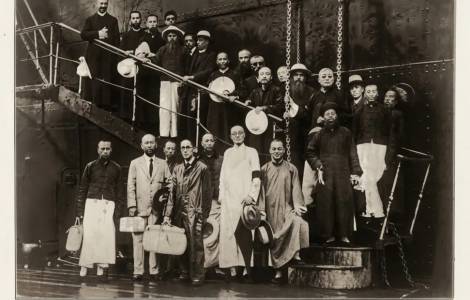
Rome (Fides News Agency) – On October 28, 1926, exactly 100 years ago, Pope Pius XI consecrated six Chinese bishops in Rome: Philippe Zhao Huaiyi, Odorico Cheng Hede, Melchior Sun Dezheng, Louis Chen Guodi, Joseph Hu Ruoshan and Simon Zhu Kaimin. They were to lead, respectively, the Apostolic Vicariate of Xuanhua, the Apostolic Prefecture of Puqi, the Apostolic Prefecture of Lixian, the Apostolic Vicariate of Fenyang, the Apostolic Vicariate of Taichow and the Apostolic Vicariate of Haimen.
The establishment of these six ecclesiastical jurisdictions entrusted to Chinese clergy, together with the consecration of the six bishops, gave considerable impetus to the local rooting of the Catholic Church in China and marked a historic milestone in the life of the Chinese Church.
1. The six Chinese bishops: outstanding representatives of the native clergy
All six bishops had many years of priestly ministry and extensive pastoral experience behind them, and all displayed a balanced and thoughtful disposition. At the time of their episcopal appointments, Philippe Zhao Huaiyi was 46 years old and had been a priest for 22 years; Odorico Cheng Hede was 53 and had been a priest for 26 years; Melchior Sun Dezheng was 57 and had been a priest for 29 years; Louis Chen Guodi was 51 and had been a priest for 23 years; Joseph Hu Ruoshan was 45 and had been a priest for 17 years; and Simon Zhu Kaimin was 58 and had been a priest for 28 years.
Melchior Sun had served longest as a priest, with 29 years of ministry. Joseph Hu had the shortest period of priestly service, though even he had served for 17 years. Simon Zhu was the oldest, at 58, and Hu the youngest, at 45.
During their seminary studies, as well as before and after their priestly ordination, all six received a solid formation within foreign religious institutes. Five belonged to religious institutes: Cheng Hede and Chen Guodi to the Order of Friars Minor (O.F.M.); Sun Dezheng and Hu Ruoshan to the Congregation of the Mission (C.M.); and Zhu Kaimin to the Society of Jesus (S.J.).
Archbishop Celso Costantini, Apostolic Delegate to China, commented: “With the appointment and consecration of the six Chinese bishops in 1926, the long transitional period finally came to an end, and an entirely different era began. The arduous work carried out over many years by foreign missionaries and members of the various religious orders had at last borne fruit. (…) We hope that this time a promising path will open up.”
2. Patterns in the development of the six dioceses
According to pastoral statistics for 1949, the six dioceses were in very different situations:
Diocese Population Catholics Percentage
Puqi 700,000 5,125 0.73%
Anguo 1,200,000 33,200 2.77%
Fenyang 2,100,000 15,600 0.74%
Xuanhua 1,700,000 36,900 2.17%
Taichow 2,000,000 7,813 0.39%
Haimen 5,200,000 39,496 0.76%
In terms of their overall size, the six jurisdictions can be divided into three categories.
The first category comprises Haimen, Xuanhua and Anguo. Each had more than 30,000 faithful and a relatively large number of priests and religious sisters.
The second category consists of Fenyang. It had more than 15,000 faithful and a relatively large number of priests, but no religious sisters.
The third category comprises Taichow and Puqi. These were the weakest jurisdictions: both had fewer than 10,000 faithful and only a few dozen priests and religious sisters.
In terms of ecclesiastical structure, the six jurisdictions fell into two categories.
The five jurisdictions of Anguo, Fenyang, Xuanhua, Taichow and Haimen remained apostolic vicariates from their establishment in 1926 until 1946, when all five were raised to the status of dioceses.
Puqi, by contrast, remained an apostolic prefecture from the time of its establishment. In 1926, Apostolic Prefect Cheng Hede was consecrated Titular Bishop of Catenna and thus received episcopal rank. After his death on November 14, 1928, however, his successors, Msgr Joseph Zhang Jingxiu and Msgr Joseph Li Daonan, were both apostolic prefects rather than apostolic vicars: they therefore continued to lead the jurisdiction as priests, with the title of apostolic prefect. It was not until May 10, 1951, that the Apostolic Prefecture of Puqi was raised to the status of a diocese and its Apostolic Prefect, Msgr Joseph Li Daonan, was elevated to the rank of diocesan bishop.
3. The six Chinese ecclesiastical jurisdictions helped advance the inculturation of the Church in China
After more than twenty years of development, by 1949 the number of dioceses entrusted to Chinese clergy had risen to 24, spread across 12 provinces:
- Hebei: 5
- Sichuan: 3
- Hubei: 3
- Shandong: 2
- Shanxi: 2
- Shaanxi: 2
- Jiangsu: 2
- Mongolia: 1
- Northeastern China: 1
- Henan: 1
- Zhejiang: 1
- Yunnan: 1
Eight provinces, by contrast, had no dioceses entrusted to Chinese clergy: Gansu, Anhui, Hunan, Jiangxi, Fujian, Guangdong, Guangxi and Guizhou.
There were also three other apostolic vicariates led by Chinese bishops, which some authors likewise classify as dioceses entrusted to Chinese clergy. In 1937, Zhao Zhensheng became bishop of the Apostolic Vicariate of Xianxian; in 1939, Chen Qiming became bishop of the Apostolic Vicariate of Zhengding; and in 1941, Zhang Weidu became bishop of the Apostolic Vicariate of Xinyang.
In short, the establishment of the six dioceses entrusted to Chinese clergy, followed by the creation of other dioceses of the same kind, gave considerable impetus to the inculturation of the Catholic Church in China.
According to the statistics, over the 24-year period from 1926 to 1949, the total number of Catholics in China rose from 2,434,517 to 3,304,071. The number of Chinese priests increased from 1,272 to 2,785, while their share of the total clergy, Chinese and foreign combined, rose from 41.99% to 51.11%.
4. Archbishop Celso Costantini’s essential role in establishing dioceses entrusted to Chinese clergy
In August 1922, Pope Pius XI appointed Celso Costantini the first Apostolic Delegate to China. Costantini arrived in the country in November of that year and immediately took up his duties, relinquishing them in 1933 for health reasons. During his eleven-year tenure, he resolutely implemented the three major encyclicals of the two pontiffs. He vigorously promoted the inculturation of the Catholic Church in China and achieved significant results.
He believed that “the true owner of a mission is not the missionary, but the native clergy and the faithful, just as a minor’s property belongs not to the guardian but to the minor himself. When the minor comes of age, he can become independent. Unfortunately, the Church in China is already three hundred years old and is still regarded as a minor.”
He also stressed: “Missionary activity is a purely supernatural undertaking. Jesus founded a Catholic Church, that is, a universal Church. In France, it belongs to the French; in the United States, to the Americans; in China, to the Chinese. To resolve the missionary question, we must do everything humanly possible and then entrust ourselves to Providence. One day, it will become the Chinese Church; in the meantime, trials and sacrifices may be necessary.”
Costantini further recalled: “When I arrived in China, there were only 57 dioceses, all entrusted to foreigners. When I left the country just over ten years later, there were already 121 missionary jurisdictions, 23 of which were entrusted to Chinese bishops.”
According to the statistics, during Costantini’s eleven years in China, 64 new dioceses were established: 43 entrusted to foreign religious institutes and 21 to Chinese clergy. Dioceses entrusted to Chinese clergy thus accounted for 32.8% of the new dioceses established during that period.
The 24 dioceses entrusted to Chinese clergy were established mainly between 1923 and 1938:
Year Number Dioceses
1923 1 Puqi
1924 1 Lixian (Anguo)
1926 4 Fenyang, Xuanhuafu, Taichow, Haimen
1927 1 Linqing
1929 6 Jining, Zhaoxian, Yongnian, Jiading, Wanxian, Shunqing
1930 1 Baoding
1932 4 Zhouzhi, Hongdong, Fengxiang, Chifeng
1933 3 Zhumadian, Yanggu, Nanjing
1935 1 Zhaotong
1936 1 Xiangyang
1938 1 Shinan
The dates of their establishment highlight Costantini’s role particularly clearly.
According to the statistics, from 1923, the year in which the first diocese entrusted to Chinese clergy was established, until 1949, only 24 dioceses of this kind were created in China. They represented just 17.27% of the 139 dioceses then existing in the country. Over those 26 years, 81 new dioceses had been established in China, but only 24 had been entrusted to Chinese clergy: more than 70% remained in the hands of foreign religious institutes. From the perspective of the Chinese Church, this situation cannot but leave a certain bitterness.
At the same time, these figures throw Costantini’s contribution into even sharper relief. During his tenure, 21 dioceses entrusted to Chinese clergy were established, accounting for 87.5% of the total of 24.
Costantini observed in a highly critical tone: “A mission can be compared to a flower grown in a greenhouse. To flourish fully, it must be transplanted into the open ground and take deep root. Greenhouse flowers, indeed, cannot withstand harsh weather. So it was with the Chinese Church in the past: whenever persecution broke out nationwide, the missionaries were expelled and everything disappeared.”
Even today, these words stir deep emotion and a sense of bitterness.
5. Experiences and lessons from the establishment of the six dioceses entrusted to Chinese clergy
(1) Although the Puqi experiment also had negative aspects, its historical significance remains considerable
In 1923, Costantini encountered enormous difficulties as he worked to establish the Apostolic Prefecture of Puqi. Experience was lacking, and foreign missionaries were not particularly supportive of establishing dioceses entrusted to Chinese clergy. The foreign clergy expressed strong reservations, and even the Chinese clergy complained about the extremely difficult conditions in Puqi.
On that occasion, some American Franciscans even resorted to a ploy to make a favourable impression on Costantini. When he visited Puqi, they gave him a spectacular welcome: “From the railway station to the church, the street was packed with people; firecrackers went off everywhere, and gongs and drums resounded.”
The atmosphere was highly festive. The missionaries themselves described Puqi as a place “located at an important crossroads between north and south, directly accessible by train from Hankou, with daily boats to Jiayu and extremely convenient land and water connections.” The reality, however, was very different.
Before the establishment of the Apostolic Prefecture of Puqi, the four districts concerned had only one parish with a resident Chinese priest, in Chongyang, and the faithful numbered just 729 in total. The territory therefore did not meet the basic requirements for the establishment of a diocese. This explains why, although the Apostolic Vicariate of Hankou then had 23 Chinese priests, only eight volunteered to serve in Puqi, among them the future Bishop Cheng Hede.
At the same time, the six relatively wealthier districts of Wuchang and its surrounding area were entrusted to the American Franciscans and formed the Apostolic Prefecture of Wuchang. Yet this jurisdiction, too, had only just over 2,000 faithful and therefore did not meet the basic requirements for becoming a diocese. Subsequently, neither Puqi nor Wuchang developed particularly satisfactorily.
An even more serious episode followed. Some Chinese priests submitted a collective complaint to the Holy See about the situation that had arisen, which also damaged Costantini’s reputation. The Sacred Congregation of Propaganda Fide had to work for several years before it succeeded in resolving the dispute.
One person, however, deserves particular praise: Graziano Gennaro, O.F.M. (田瑞玉, Tian Ruiyu, in Chinese), then bishop of the Apostolic Vicariate of Hankou. He has gone down in the history of the Chinese Church for his obedience. The Apostolic Prefecture of Puqi was erected on December 12, 1923. Barely a week later, on December 19, Bishop Gennaro died suddenly from an illness, aged only 60.
However imperfect it may have been, the establishment of the Apostolic Prefecture of Puqi nevertheless remained a symbolic event of great importance. From that point on, Chinese missionaries had a diocese they administered themselves, and the Chinese Church took a decisive step towards inculturation. The symbolic value of establishing the Apostolic Prefecture of Puqi far outweighed its actual practical significance.
Costantini summarised the development of the situation as follows: “At first, the Chinese priests were very dissatisfied: they saw that the faithful were few and the works underdeveloped, and some foreign missionaries exerted a negative influence on them. Soon afterwards, however, they spontaneously left the Vicariate of Hankou and willingly joined the new diocese. Subsequently, under the leadership of Bishop Cheng Hede, the diocese made remarkable progress.”
(2) The Diocese of Anguo as a model for the establishment of subsequent Chinese dioceses
The establishment of the second Chinese ecclesiastical jurisdiction was also turbulent and fraught with difficulties. Celso Costantini recalled in his memoirs: “I sought to establish a second diocese entrusted to the native clergy. I was told that the Apostolic Vicar of Yanzhou, Bishop Han, and the Apostolic Vicar of Xianxian, Bishop Liu, were open-minded. Both, however, felt that the time was not yet ripe. The Bishop of Baoding, Bishop François Foucquet, on the other hand, gave me considerable support.”
On April 15, 1924, the Apostolic Prefecture of Lixian (安国), in Hebei Province, was officially established. Its foundation clearly illustrates Costantini’s working methods and diplomatic skills.
The Bishop of Baoding, Bishop Joseph Fabrègues (1872–1928), had been consecrated in May 1910 and therefore had considerable episcopal experience. Costantini first spoke with him to secure his support. Having received a favourable response, on June 12, 1923, he transferred Fabrègues to the Apostolic Vicariate of Beijing as coadjutor bishop. On the surface, this appeared to be a demotion, but in reality the Apostolic Vicariate of Beijing was of greater importance. In September 1923, Bishop Paul-Léon-Cornil Montaigne (1883–1962) was appointed Apostolic Administrator of the Apostolic Vicariate of Baoding.
When the Apostolic Prefecture of Lixian was erected on April 15, 1924, Baoding therefore had no bishop in his own right, but only an apostolic administrator. On December 18, 1924, the Holy See approved Montaigne’s appointment as Apostolic Vicar of Baoding, and on April 19, 1925, Costantini travelled to Baoding in person to preside over his episcopal consecration.
In January 1930, Montaigne was transferred to the Apostolic Vicariate of Beijing as coadjutor bishop. The Apostolic Vicar of Beijing, Bishop Stanislas-François Jarlin (1856–1933), died in January 1933, and Montaigne succeeded him as head of the vicariate.
This series of transfers, appointments and replacements shows how carefully Costantini had assessed the various factors involved in establishing the Diocese of Anguo. His approach helped ensure the orderly establishment and stable development of the second diocese entrusted to Chinese clergy.
(3) Actively exploring new paths towards inculturation by entrusting existing jurisdictions to Chinese clergy
The six apostolic vicariates entrusted to Chinese clergy were all carved out of larger jurisdictions previously administered by foreign religious institutes. With the exception of Puqi, the other five largely met the requirements for the establishment of an ecclesiastical jurisdiction, but remained relatively weak in terms of size, resources and influence.
A new question therefore arose: would it be possible to persuade some bishops belonging to foreign religious institutes to hand over certain jurisdictions to Chinese clergy, thereby entrusting them to Chinese bishops?
A new path towards promoting the inculturation of the Church was thus opening up, inspired precisely by the experience of the first six Chinese apostolic vicariates.
In 1928, during his pilgrimage to Donglü in Hebei, Costantini made an attempt in this direction. He recalled: “I decided to entrust the Apostolic Vicariate of Baoding to Chinese clergy. This caused discontent in Beijing, particularly at the French embassy. The French missionaries in Baoding, although deeply saddened, outwardly showed great cordiality and dignity.”
After two years of effort, the project finally came to fruition.
On January 25, 1930, the Sacred Congregation of Propaganda Fide approved the withdrawal of the Congregation of the Mission (C.M.) from the Apostolic Vicariate of Baoding and the transfer of its administration to Chinese clergy. Bishop Paul-Léon-Cornil Montaigne, C.M., was transferred to the Apostolic Vicariate of Beijing as coadjutor. On March 26, 1931, the Chinese priest Zhou Jishi was appointed the first Chinese Apostolic Vicar of Baoding and was consecrated bishop on August 2 of the same year.
The transfer of the Apostolic Vicariate of Baoding to Chinese clergy had far-reaching significance. Had this model been applied more widely, the inculturation of the Catholic Church in China might have taken on a new character and a new dimension.
Costantini subsequently turned his attention to a jurisdiction of even greater symbolic importance: the Apostolic Vicariate of Nanjing. Nanjing was then the capital of the Republic of China and the country’s leading political and cultural centre. The vicariate, one of the Society of Jesus’s main strongholds in China, had a large number of faithful, well-developed institutions and a flourishing pastoral life. It also wielded considerable influence both in China and abroad.
The Society of Jesus had exercised considerable influence on the development of Chinese Catholicism, but it was neither particularly supportive of nor active in establishing dioceses entrusted to Chinese clergy. For this reason, the Jesuits did not initially respond favourably to Costantini’s efforts.
On May 12, 1931, the Bishop of Nanjing, Bishop Prosper Paris, died, and his coadjutor, Bishop Auguste Haouisée (1877–1948), succeeded him as head of the vicariate. Costantini held lengthy, in-depth discussions first with one and then with the other of these Jesuit bishops, encouraging them to establish an ecclesiastical jurisdiction entrusted to Chinese clergy. Despite strong resistance, his efforts gradually began to bear fruit.
On December 13, 1933, Pope Pius XI promulgated the decree dividing the Apostolic Vicariate of Nanjing. The decree entrusted the Vicariate of Nanjing to Chinese clergy, while the Society of Jesus was assigned the new Apostolic Vicariate of Shanghai.
The measure was officially adopted 40 days after Costantini had left his post as Apostolic Delegate to China, but he deserves the credit for laying the groundwork and bringing the project to fruition. Unfortunately, after Baoding and Nanjing, this process saw no further significant developments.
Conclusion
In light of the foregoing, building a Church in China that is rooted in local realities requires, first and foremost, allowing and encouraging the Church in China to be authentically Chinese. Entrusting Chinese bishops with the leadership and administration of the Church in China is, in turn, a fundamental prerequisite for what is known as the “Sinicization” of Catholicism.
The history of the foundation and development of the six Chinese dioceses offers the Chinese Church a wealth of valuable experience and important lessons. A century ago, Archbishop Celso Costantini declared: “The Supreme Pontiff had a deep concern for China, fervently wished it to become a strong nation, and maintained that China should be governed by the Chinese.”
I sincerely hope that the Church in China may continue to grow in a healthy and sustainable way, and that its future may become ever more promising. (Fides News Agency 28/10/2026)
*Anyang Normal University*



 VATICAN/CHINA - “The Face of the Universal Church in China”: Conference at the Urbaniana University Marking the 100th Anniversary of the Ordinations of the First Six Chinese Bishops, Featuring the Bishops of Beijing and Haimen
 CHINA/VATICAN - From “exceptional event” to a common practice: Chinese bishops take part in Holy See initiatives
 THE CHURCH OF THE SHEAVES CONFERENCE - Listening the Continents: Gifts, Challenges and New Missionary Pathways
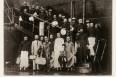 One hundred years later. The long journey of China’s first Bishops to receive Episcopal Ordination from the Successor of Peter
 At the Course for Newly Appointed Bishops, practical tools for missionary communion with the Successor of Peter were presented
 Archbishop Nwachukwu presents the “Church of the Sheaves”, an initiative born out of gratitude
 From a French pioneer of the American frontier to Pope Leo XIV: Sister Lyn Osiek's long missionary journey