Information service of the Pontifical Mission Societies since 1927
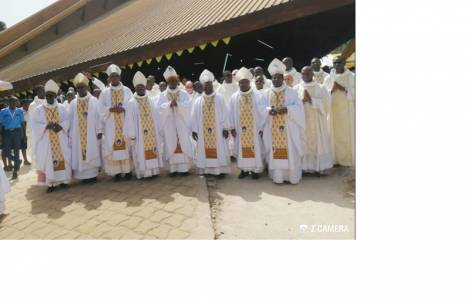
Abidjan (Fides News Agency) – “Peace is not built among people who all think alike, but among people who are different and accept one another as brothers and sisters.” This is the message conveyed by the Bishops of Ivory Coast in a statement issued on the occasion of the 30th National Day of Peace, celebrated on Sunday, November 15.
“On November 15, 2026, our country celebrates the 30th National Day of Peace, established in 1996 by President Aimé-Henri Konan Bédié,” reads the statement, which also recalls that on the same day “the universal Church celebrates the 10th World Day of the Poor, established by Pope Francis.” “The coincidence of these two celebrations offers a particularly meaningful opportunity to renew our reflection on the demands of peace, social justice, and fraternity,” the bishops emphasize.
Peace and social justice go hand in hand, as the Church’s social teaching reminds us. “How can we claim to build lasting peace when families live in precarious conditions, communities are deprived of their means of subsistence, and people are marginalized or abandoned to their fate? Likewise, how can we speak of development and prosperity when inequality, exclusion, and injustice undermine human dignity and weaken social cohesion?” the bishops ask.
Referring to the examples of Ivory Coast’s first President, Félix Houphouët-Boigny, and Nelson Mandela, the bishops stress that “these two great figures remind us that peace requires overcoming personal interests, the courage to engage in dialogue, and the willingness to recognize others as partners in building the Nation.”
“Our country, which has experienced painful socio-political and electoral crises, cannot afford to pass the burden of its divisions on to future generations,” they emphasize. “It is therefore our duty to preserve national unity and make dialogue a permanent instrument for conflict prevention and reconciliation.”
Ivory Coast emerged from a period of conflict that began in 2002 and ended in 2011. However, the aftermath of that violence continues to fuel tensions that can be exploited by unscrupulous political figures.
Nevertheless, the country has made significant progress, including in the fight against corruption. One such achievement was the decision, announced on October 30, to remove Ivory Coast from the Financial Action Task Force (FATF) grey list. “This decision recognizes the efforts made by our country to strengthen measures to combat money laundering and the financing of terrorism,” the bishops point out.
The bishops nevertheless urge the country to continue along the path of respect for human rights, ensuring fair justice, transparency in the management of public affairs, combating corruption, and effectively safeguarding fundamental freedoms. “These are all essential conditions for strengthening the rule of law and ensuring that institutional and economic progress translates into tangible improvements in living conditions for the entire population, particularly the most vulnerable,” they conclude.
(L.M.) (Fides News Agency, 17/11/2026)