Information service of the Pontifical Mission Societies since 1927
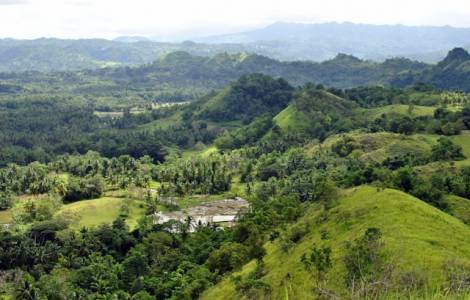
[Foto di Ken Shono su Unsplash]
Manila (Agenzia Fides) – In the Philippines, the “Season of Creation” – the period from 1 September to 4 October, which in 2026 is centred on the theme “Living Water” – is not merely a liturgical observance, but a journey involving parishes, dioceses, religious congregations and movements, bringing together prayer, ecological awareness and concrete commitment to the protection of ecosystems. The season is particularly significant in a country where deforestation, mining activities and pressure on terrestrial and marine ecosystems pose a threat to communities and to the most vulnerable populations.
For 2026, the Catholic Bishops’ Conference of the Philippines has invited all ecclesial communities to celebrate the Day of Creation on the first Sunday of September, using the new “Missa pro custodia creationis,” the Mass for the Care of Creation. The invitation forms part of a journey that has already taken root in recent years and which, in the Philippines, often continues until the second Sunday of October, coinciding with the National Day for the Defence of Indigenous Peoples. This highlights the close link between environmental protection, the rights of indigenous peoples and social justice.
In this context, Cardinal Pablo Virgilio David, Bishop of Kalookan, has stressed the need for an “authentic ecological conversion”, linking it to justice for the poor and to concrete choices for the protection of forests and seas. The liturgical celebration, he said, is the starting point for a commitment to the daily life of communities.
An important role is played by the Laudato Si’ Movement in the Philippines, which for years has promoted an Ecumenical March for Creation in Manila, bringing together people from different Christian denominations. The initiative, structured around nine “prayer stations” of the “Via Creationis”, combines spiritual moments with reflection on the shared responsibility for our “common home”, also thanks to collaboration with ecumenical organizations and networks.
National commitment is reflected in numerous local initiatives. In the Archdiocese of Manila, the Season of Creation is being observed through a series of events which, inaugurated by a Mass celebrated on 1 September, include a screening of ‘The Letter’, a film inspired by the Encyclical Laudato Si’, as well as reflection and prayer materials for parishes. Ateneo de Manila University is also taking part with artistic, photographic and cultural initiatives, with young people playing a leading role. The culmination will be on 4 October, the Feast of St Francis of Assisi, with the public initiative “Jubilee for Creation.”
In the Diocese of San Pablo, in Laguna Province on the island of Luzon, the Commission on Ecology is proposing a weekly program of meetings and webinars on environmental inequalities, together with awareness-raising initiatives concerning a local issue: the Ahunan Dam project in Laguna Province has met with strong local opposition because its construction raises serious environmental, social and cultural concerns.
For the faithful of the Diocese of Imus (a suffragan of Manila on the island of Luzon), the Season of Creation opened with a gathering at the Laudato Si’ Farm, attended by priests, religious and parish representatives. Further south, in the Prelature of Isabela (on the island of Basilan), several tree-planting initiatives and ecotourism projects are being promoted with the aim of creating sustainable livelihoods. In the Archdiocese of Davao, (on the island of Mindana), a pilgrimage is scheduled for 13 September to “Bukid sa Kaluoy” (“Mountain of Mercy”) on Samal Island, with the Way of the Cross, the symbolic planting of trees and a Mass organized by the Social Action Center.
These experiences share a common approach: care for Creation is not separated from pastoral life and, when necessary, is accompanied by advocacy initiatives opposing projects considered harmful to the environment, including dams, land exploitation, deforestation and mining activities.
The relationship between resource exploitation and Christian responsibility was also addressed by Bishop Broderick Pabillo, Apostolic Vicar of Taytay on the island of Palawan in the central Philippines, during the opening Mass of the second National Congress of the Conference of Major Superiors of the Philippines, which brought together 233 religious superiors from 159 religious congregations.
Bishop Pabillo recalled the permanent damage caused to forests. “Trees can be planted, but forests cannot be replanted,” he said, challenging the use of the term “reforestation” when the destruction of mature or near-pristine forests is supposedly offset by new tree planting. “It is a great lie,” he stressed, criticizing permits that allow thousands of large trees to be felled to make way for mining activities. The Bishop referred in particular to the case of southern Palawan, where around 57,000 trees are reportedly set to be felled as part of a local mining project.
“Creation must not be used, but respected,” he said, linking the destruction of ecosystems to its consequences for local populations, from flooding to other disasters aggravated by the loss of natural balances. According to Bishop Pabillo, care for our common home belongs to the very mission of consecrated life: “Creation is part of God’s redemptive work,” he said, inviting religious to recognize environmental protection as a truly Christian responsibility.
The next step, therefore, is “to pray for Creation, but also to learn how to defend it.”
(PA) (Fides News Agency, 2/9/2026)