
Information service of the Pontifical Mission Societies since 1927
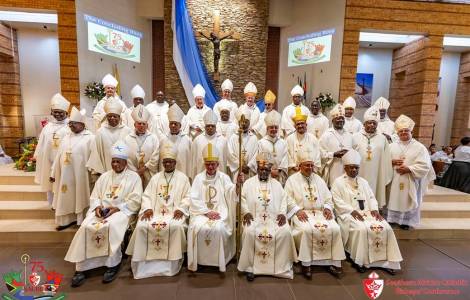
Cape Town (Fides News Agency) – In light of the “escalating violence and tensions” against foreign migrants in various regions of South Africa, the South African Catholic Bishops' Conference (SACBC) issued a strong pastoral statement this Wednesday, May 20, 2026.
In the document, entitled “Pastoral Statement on Violence Against Migrants in South Africa,” signed by its president, Cardinal Stephen Brislin, the bishops' conference stated that it wished to speak out at a “critical moment with a profound sense of urgency and moral responsibility.”
The bishops condemn “unequivocally” the acts of violence, intimidation, and forced expulsion against migrants and refugees.” Such acts, they continued, “constitute a grave violation of human dignity and a betrayal of the values that should define our society.” “Violence against migrants can never be justified, tolerated, or accepted,” they affirmed. In light of the upcoming local elections, the bishops also wish to issue “a special and urgent appeal to political parties and all those seeking public office” not to exploit the migration situation or the suffering of communities “for political purposes.” “The instrumental use of fear, division, and human vulnerability to gain electoral advantages is morally unacceptable and risks further destabilizing an already fragile social environment,” they emphatically stress.
Human rights organizations and the South African Human Rights Commission (SAHRC) have also raised the alarm. In a statement published on May 19, 2026, the SAHRC expressed “deep concern” about reports and videos circulating on social media depicting violent attacks on undocumented immigrants, particularly in the province of KwaZulu-Natal, according to the South African news portal IOL. In addition to condemning the abuses, the bishops call for addressing the root causes of the problem. “These protests and these waves of violence” are “symptoms of deeper, older failures and broken promises that can no longer be ignored,” they analyze in their statement. Therefore, these root causes must be “honestly addressed,” otherwise “the cycle of anger, resentment, and violence will continue to intensify.”
They offer a detailed analysis of the causes of this phenomenon. “For too long,” they continue, “the cry of the poor has gone unheard. The promises of dignity, inclusion, and equal opportunity remain unfulfilled for many South Africans. Persistent deficiencies in the delivery of public services, growing inequality, and the scandal of mass unemployment have led to despair and frustration.” Sources of tension between the native population and migrants, “particularly in economically disadvantaged communities,” include “competition for scarce resources such as jobs, housing, and public services,” as well as a loss of trust. “Porous borders, corruption in the Ministry of Home Affairs, and irregular immigration procedures have eroded public confidence in the state’s ability to effectively manage migration,” they write.
As early as January 2023, in a statement released at the end of the SACBC plenary assembly, the bishops condemned the continuing “racism of a colonial and apartheid-like nature” in South African society, including within the Church itself. They stated that racism cannot be ended by “denying” it, but by naming it, acknowledging discrimination—including in parishes, seminaries, and communities—and implementing awareness and training programs. The May 2026 statement thus appears to be a further development of this commitment.
Cardinal Stephen Brislin, Archbishop of Cape Town and President of the SACBC, has repeatedly condemned xenophobia on moral grounds. In 2025, he denounced groups that denied foreigners access to hospitals and schools, stating that “regardless of immigration status, every person has a right to medical care and education.” In a pastoral letter dated October 4, published on the SACBC website, he called these practices “deeply repugnant.” He saw them as a sign of a moral crisis: the temptation to scapegoat the most vulnerable instead of addressing the structural causes of poverty, and especially corruption and mismanagement.
The most recent statement, dated May 20, places the fight against xenophobia in a faith-based framework. “Every human being is created in the image and likeness of God,” the bishops write. This entails a non-negotiable obligation to protect the dignity of every human being, "especially the most vulnerable," including migrants and refugees. Rererring to Pope Francis'Encyclical "Fratelli Tutti," they call for a fraternity that transcends borders, fear, and exclusion: "We cannot build a peaceful society on hatred, stigmatization, or violence." The statement concludes with a prayer at this "decisive moment for the nation," that the Lord "may grant the courage to confront evil, the wisdom to discern what is right, and the strength to act justly, mercifully, and truthfully." (ML) (Fides News Agency, 21/5/2026)



 CHINA/VATICAN - From “exceptional event” to a common practice: Chinese bishops take part in Holy See initiatives
 In Malawi, a whole stadium celebrates 100 years of World Mission Sunday: “United in Christ, united in mission”
 EUROPE/ROMANIA - Faith that unites peoples: The memory of Pope Luciani celebrated in the church of Italian migrants
 Cardinal Aveline, Archbishop de Moulins-Beaufort, and missionary renewal in France
 US House bill calls to halt aid to Nigeria over anti-Christian violence
 The hidden tragedy of suicides in refugee camps
 Hope can rise again amid the rubble: The mission of Catholic Schools in the peripheries of Latin America
 ASIA/VIETNAM - A hidden treasure of faith and charity: the work of Vietnamese nuns among lepers