
Information service of the Pontifical Mission Societies since 1927
Fides
by Paolo Affatato
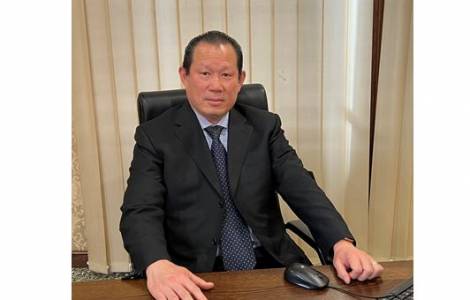
Vatican City (Agenzia Fides) – With regard to the conflict in the Middle East, "Malaysia supports dialogue, respect for international law, and the protection of human dignity – concrete prerequisites for a stable and just international order." The country "promotes ASEAN's (Association of Southeast Asian Nations) commitment to peace, stability, and a rules-based regional order," Malaysia's Ambassador to the Holy See, Hendy Assan, told Fides in an interview. The Catholic diplomat, originally from the island of Borneo, reaffirmed, as a citizen of a multicultural and multi-religious country, his desire to restore a climate of peace and cooperation in Southeast Asia, which has been torna part by the conflict in Myanmar and the recent tensions between Thailand and Cambodia.
Ambassador Assan, the world finds itself in a new war in Middle East. What is your point of view from the Far Eastern perspective?
The situation we are witnessing in the Middle East is extremely grave and deeply worrying. What is unfolding is not only another regional conflict. It risks becoming a wider war with very dangerous global consequences humanitarian, political, and even moral. When violence escalates in such a sensitive and historically complex region, the impact extends far beyond its borders.
From my perspective, and reflecting the long-standing foreign policy principles of Malaysia, the first judgment we must make is that war can never be considered a solution to political problems. War may temporarily change realities on the ground, but it almost always multiplies suffering, deepens divisions, and creates wounds that last for generations. The immediate victims are always civilians, families, children, and ordinary people who have no responsibility for political decisions but bear the heaviest cost.
Malaysia has consistently advocated for peaceful dialogue, respect for international law, and the protection of human dignity. These are not abstract ideals. They are practical necessities if we want a stable and just international order. In conflicts such as the one currently unfolding, it is essential that all parties exercise restraint, avoid further escalation, and return to diplomatic engagement as quickly as possible. The international community must renew its commitment to a just and lasting peace in the Middle East.
Peace cannot be imposed by force. It must be built through courage, dialogue, and mutual recognition. The world today does not need more weapons or more confrontation. It needs wisdom, patience, and the political will to choose peace over conflict.
Malaysia is a multicultural, multi-ethnic country. How can national unity be maintained and social or religious conflict prevented? How can harmony be maintained? What are the challenges?
Malaysia is home to approximately 35 million people and is composed of Malays and other Bumiputera communities, who together make up about 70% of the population, Chinese Malaysians at around 23%, Indians at about 7%, and numerous indigenous communities, especially in Sabah and Sarawak. Islam is the religion of the Federation, but Buddhism, Christianity, Hinduism, Sikhism, and traditional beliefs are all practiced openly.
National unity in such a context cannot be assumed; it must be intentionally cultivated. The Federal Constitution provides the central framework. It recognises Islam as the religion of the Federation while at the same time guaranteeing freedom of religion. The Rukun Negara, our national philosophy introduced after the events of May 1969, articulates principles that guide our coexistence: belief in God, loyalty to King and country, supremacy of the Constitution, rule of law, and good behaviour and morality.
Harmony is maintained through a combination of legal safeguards, inclusive development policies, and continuous inter-communal engagement. However, challenges remain. Identity politics can intensify during times of economic uncertainty. Social media can amplify polarising narratives. Socioeconomic disparities between regions and communities must be addressed carefully to avoid resentment. The key to preventing conflict lies in strengthening institutions, promoting civic education, and encouraging sustained dialogue among religious and ethnic groups, especially among the youth.
Support for conservative Islamic policies seems to be growing in the country, particularly among younger Malaysian voters. How is religious freedom guaranteed and protected in Malaysia?
The 2023 Pew Research Center survey, which found that 86% of Malaysian Muslims supported making Sharia law official law, needs to be understood within Malaysia’s existing legal structure. Malaysia already operates a dual legal system. Sharia courts have jurisdiction over personal and family matters for Muslims, while civil courts retain authority over criminal law, constitutional matters, and non-Muslims.
Religious freedom is guaranteed under Article 11 of the Federal Constitution, which states that every person has the right to profess and practice his or her religion. Non-Muslims are not subject to Sharia jurisdiction. Churches, temples, and other houses of worship function openly throughout the country. Christian communities, including Catholics, celebrate liturgies in multiple languages and operate social and charitable institutions.
The challenge is to preserve constitutional balance while acknowledging the aspirations of the Muslim majority. Malaysia is not a theocratic state; it is a constitutional monarchy with Islam in a special constitutional position. Maintaining this equilibrium requires judicial independence, responsible political leadership, and a continued commitment to moderation.
In November 2025, 900 delegates from Catholic Churches in 32 Asian countries gathered in Penang to discuss the theme “Walking Together as Peoples of Asia.” Does Malaysia share this aspiration?
Malaysia very much shares the aspiration reflected in the gathering in Penang under the theme “Walking Together as Peoples of Asia.” The Great Pilgrimage of Hope 2025, hosted in Penang and supported by the Federation of Asian Bishops’ Conferences, emphasised unity, dialogue, shared mission, and a spirit of synodality in journeying together as Church and as peoples of Asia. The focus on hope, listening, and solidarity across cultures is deeply woven into Malaysia’s own social fabric.
Malaysia is a multireligious and multi-ethnic nation and our national philosophy, the Rukun Negara reflects similar ideals. Its five principles aim to nurture unity, mutual respect and social harmony. These principles were introduced to strengthen cohesion in a diverse society and remain central to Malaysia’s identity today.
At its core, Malaysia values respect for diversity, peaceful coexistence, and shared responsibility for the common good. While challenges remain, the aspiration to “walk together” is deeply embedded in the nation’s history and values.
How does the state view the Catholic Church? What are the bilateral relations like?
Malaysia views the Catholic Church primarily through the prism of its constitutional framework, its policy of interreligious harmony, and its longstanding commitment to constructive international engagement. As a federal constitutional monarchy, Malaysia recognises Islam as the religion of the Federation under Article 3 of the Federal Constitution, while at the same time guaranteeing freedom of religion for other faiths. Within this framework, the Catholic Church is recognised as one of the historic and established religious communities in the country, with deep roots that predate independence.
The Catholic community in Malaysia forms part of the broader Christian minority and has contributed significantly to the nation’s development, particularly in education, healthcare, and social services. Catholic mission schools and institutions have played a prominent role in nation-building, producing generations of Malaysians across ethnic and religious lines. The Church’s charitable and welfare activities, including outreach to marginalised and vulnerable communities, are generally viewed positively, as they align with Malaysia’s own emphasis on social cohesion and inclusive development.
At the domestic level, the relationship between the state and the Catholic Church is managed through established legal and administrative mechanisms that govern religious affairs. The Church operates freely within the bounds of Malaysian law, maintaining diocesan structures in Peninsular Malaysia as well as in Sabah and Sarawak, where Christianity has a particularly significant presence. Engagement between public authorities and Church leaders typically takes place through consultative and interfaith platforms, especially on matters concerning social harmony and religious sensitivities.
How are relations with the Holy See and how are they progressing?
On the bilateral front, relations between Malaysia and the Holy See are cordial and constructive. Formal diplomatic relations were established in 2011, reflecting Malaysia’s recognition of the Holy See’s unique role in international affairs not only as the central governing authority of the Catholic Church, but also as a sovereign entity of international law with a distinct moral and diplomatic voice.
Malaysia appreciates the Holy See’s consistent advocacy for peace, dialogue among civilisations, poverty eradication, environmental stewardship, and the protection of human dignity. These priorities align strongly with Malaysia’s own foreign policy principles, including moderation, multilateralism, and the peaceful resolution of disputes.
At the same time, Malaysia values the Holy See as a partner in promoting interreligious dialogue. As a multi-religious and multi-ethnic society, Malaysia attaches great importance to fostering mutual respect and understanding among faith communities. The Holy See’s longstanding experience in interfaith engagement, including dialogue with Muslim communities globally, provides a meaningful platform for cooperation and exchange of best practices.
In essence, the Malaysian state views the Catholic Church as an integral part of its diverse social fabric, while its bilateral relations with the Holy See are characterised by mutual respect, shared ethical concerns, and a common commitment to dialogue and peace. The relationship is not merely symbolic; it is grounded in substantive engagement, both domestically and internationally, reflecting a mature and forward-looking partnership.
St. Francis Xavier, the Catholic saint who brought the Gospel to the East, landed in Malacca: today, do you see his legacy in the nation and, in particular, in the life of the Catholic community?
St. Francis Xavier’s arrival in Malacca in 1545 marked a significant moment in the early history of the Catholic Church in Southeast Asia. He did not come merely as a traveller, but as one of the most determined missionaries of the Society of Jesus, destined to spread the Gospel across Asia from this strategic port city. In fact, Malacca became a pivotal base for him as he prepared for missions to places like Japan and attempted entry into China. His presence there was not fleeting: he made several trips between 1545 and 1552, preaching, administering sacraments, caring for the sick, and evangelising Portuguese settlers and local populations.
One very real legacy of his time here is the enduring Catholic community in Malacca and the wider region. The Catholic faith that he helped plant has grown and evolved over the centuries into organized church structures today, for example, the Catholic Diocese of Malacca-Johor serves thousands of faithful across Malaysia. Locally, the Church of St. Francis Xavier stands as a visible, living witness to that heritage. Built in the mid-19th century on the site of earlier Portuguese missions, this neo-Gothic church is not only one of Malacca’s oldest and largest Catholic churches but also still functions fully as a parish where Masses and community activities continue regularly.
Another tangible sign of Xavier’s ongoing influence is the annual celebration of his feast day on December 3. Each year, Catholics from across Malaysia and beyond gather often at the ruins of the old St. Paul’s Church on St. Paul’s Hill, where Xavier’s body was once buried to celebrate his life and mission with special Masses and processions. Beyond liturgy and historic buildings, his legacy lives in other institutions that bear witness to the Church’s role in social life. Catholic schools in Malacca, some tracing their origins back to the missionary era or named in honour of Francis Xavier, continue to educate young people regardless of faith background.
But the legacy is not just institutional or architectural. For many Catholics in Malaysia today, St. Francis Xavier represents a spiritual model of missionary zeal, compassion, and openness to diverse cultures. His example encourages local believers to live out their faith in a multi-religious society, embracing service and dialogue with neighbours of other faiths. The Church in Malaysia reflects the same intercultural encounter that defined his mission, bringing together believers of Malay, Chinese, Indian, and indigenous backgrounds. This kind of lived legacy often shows up in ordinary parish life: outreach programs, inter-faith engagement, and community-building efforts rooted in Catholic social teaching.
The influence of the Malaysian Catholic Church in the field of education has diminished since the government took control of education in both public and private schools. Why not give an institution such as the Catholic Church the opportunity to operate freely and autonomously within the education system, within a shared framework?
Catholic missionary schools were instrumental in Malaysia’s early education system. After independence, many of these schools were integrated into the national system to ensure standardisation, equitable access, and alignment with national education policies.
Education in Malaysia is closely tied to nation-building, language policy, and social cohesion. While the government maintains oversight of the national curriculum, mission schools continue to preserve their historical identity and values. Catholic institutions remain active in private higher education and in social outreach.
The question of autonomy must therefore be approached within the broader framework of national integration and constitutional governance. Constructive partnership, rather than institutional separation, offers a more sustainable path forward.
What is Malaysia's specific role and contribution within ASEAN?
Malaysia is a founding member of the Association of Southeast Asian Nations, established in 1967. Malaysia has consistently supported ASEAN centrality in regional security architecture and has promoted economic integration, including through the ASEAN Free Trade Area.
Malaysia’s role within ASEAN, particularly as Chair of the 47th ASEAN Summit in Kuala Lumpur, has been one of leadership, coordination, and steady consensus-building. Under the theme “Inclusivity and Sustainability,” Malaysia has worked to ensure that ASEAN remains united, forward-looking, and responsive to both regional and global challenges.
Politically, Malaysia has reinforced ASEAN’s commitment to peace, stability, and a rules-based regional order. As Chair, Prime Minister Anwar Ibrahim guided discussions in a way that emphasised dialogue, diplomacy, and mutual respect among Member States. Malaysia has consistently underscored the importance of ASEAN Centrality and unity, particularly at a time of increasing geopolitical tensions.
Economically, Malaysia has accelerated regional integration efforts. During its Chairmanship, substantial progress was made on Priority Economic Deliverables, including the upgrade of the ASEAN Trade in Goods Agreement, advancements in the ASEAN Digital Economy Framework Agreement, and initiatives to strengthen semiconductor supply chain resilience. Malaysia has also supported deeper financial cooperation, sustainable finance frameworks, and diversification of trade partnerships to ensure ASEAN’s long-term competitiveness.
On sustainability and energy transition, Malaysia has been particularly proactive. It has pushed forward regional initiatives such as the ASEAN Power Grid, the Strategy for Carbon Neutrality, the Blue Economy Implementation Plan, and the Declaration on the Right to a Safe, Clean, Healthy and Sustainable Environment. These efforts reflect Malaysia’s commitment to balancing economic growth with environmental responsibility.
In humanitarian matters, especially concerning Myanmar, Malaysia has played a constructive role by supporting the operationalization of ASEAN’s humanitarian mechanisms, including the ASEAN Humanitarian Assistance (AHA) Centre, and by calling for safe and inclusive delivery of assistance.
Overall, Malaysia’s contribution has been to strengthen ASEAN’s institutional coherence, drive practical outcomes, and maintain unity while navigating complex regional issues.
In April 2021, ASEAN drew up a peace plan for Myanmar, also known as the “Five-Point Consensus,” which has remained a “dead letter” as the war in the country continues. What should be done now? What is Malaysia proposing within ASEAN to reopen the path to negotiation?
The Five-Point Consensus remains ASEAN’s agreed framework for addressing the crisis in Myanmar. However, its implementation has been uneven, and the conflict continues. The key challenge now is not to abandon the framework, but to make it more effective and practical.
At this stage, humanitarian access must remain the immediate priority. During our ASEAN Chairmanship, we highlighted the importance of safe, transparent, inclusive, and non-discriminatory delivery of humanitarian assistance. Malaysia supports strengthening the role of the AHA Centre and ensuring that assistance reaches affected communities across Myanmar. Humanitarian cooperation can serve as a confidence-building measure and open space for broader engagement.
Beyond humanitarian efforts, there is a need to revitalise political dialogue. The Five-Point Consensus calls for constructive dialogue among all parties. Malaysia believes that ASEAN must continue encouraging inclusive engagement, supported by the Special Envoy mechanism, while maintaining ASEAN unity. Clearer benchmarks, stronger reporting mechanisms, and sustained diplomatic engagement may help restore momentum.
Malaysia’s approach is pragmatic. It recognises that progress may be incremental. Rather than replacing the Five-Point Consensus, Malaysia supports reinforcing it through practical steps, sustained engagement, and stronger coordination among ASEAN Member States and international partners.
The objective is not to impose a solution, but to reopen space for negotiation and reduce violence, consistent with ASEAN’s principles.
How does Malaysia view the recent tensions and conflict between Thailand and Cambodia? How can bilateral relations between the two countries be normalized to restore an atmosphere of peace in Southeast Asia?
Malaysia views the recent tensions between Thailand and Cambodia with deep concern, primarily because any instability between two ASEAN member states has broader implications for regional peace, economic integration, and ASEAN’s credibility as a cohesive bloc.
As the 2025 Chair of ASEAN, Malaysia, under the leadership of Prime Minister Anwar Ibrahim has adopted a proactive but carefully calibrated approach. Malaysia facilitated an immediate ceasefire in July 2025 and played a central role in hosting and witnessing the signing of the Kuala Lumpur Peace Accord on 26 October 2025. The objective was clear: de-escalation, restoration of communication channels, and a reaffirmation of both countries’ commitment to peaceful dispute resolution. Malaysia has consistently framed its role as that of a neutral facilitator providing a trusted platform for dialogue rather than intervening in the domestic or sovereign matters of either party.
The objective is not simply the absence of armed clashes, but the restoration of trust and the strengthening of ASEAN solidarity. By prioritizing dialogue, mutual respect, and institutional processes, Malaysia believes that Thailand and Cambodia can normalize relations and contribute once again to an atmosphere of peace and cooperation in Southeast Asia.
What role can religious leaders and interreligious dialogue play in resolving conflicts and achieving peace, both locally and globally?
Religious leaders possess moral credibility and grassroots influence. They can shape narratives, counter extremism, and promote reconciliation. Interreligious dialogue fosters mutual understanding and reduces the risk of misperception.
In Malaysia, interfaith engagement has been an important mechanism for diffusing tensions and strengthening social cohesion. Globally, religious diplomacy can complement political negotiations by addressing ethical and humanitarian dimensions of conflict. Peace building and interreligious dialogue are natural areas of collaboration with the Holy See. Our shared emphasis on human dignity, dialogue, and peaceful coexistence provides a strong foundation for continued cooperation. (Agenzia Fides, 29/3/2026)



 Brazil - October 4 elections could shape the Country’s future
 POPE IN FRANCE/XI - Leo XIV in Metz: Europe seeks peace in the "Lantern of the Good Lord"
 The BRICS between “global governance” challenges and the growing role of African countries
 AMERICA/UNITED STATES - At the "G20 Interfaith Forum" Apostolic Nuncio Caccia points out that technologies and innovations "do not tell us what the good is”
 Leo XIV to the John Paul I Vatican Foundation Conference: peace is a daily Mission