
Information service of the Pontifical Mission Societies since 1927
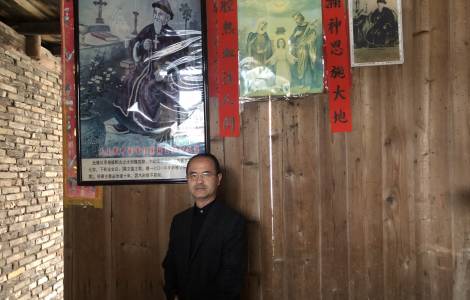
by Paul Han*
Shijiazhuang (Fides News Agency) –Fides News Agency publishes this article by Chinese priest Paul Han as a contribution to reflection and further study in view of the forthcoming Centenary of the episcopal ordination of six Chinese Bishops, ordained by Pope Pius XI in St Peter’s Basilica on 28 October 1926.
§§§
A Centenary Commemoration
On October 28, 1926, six Chinese priests—Odorico Cheng Hede (a Franciscan from the Diocese of Puqi, Hubei), Melchior Sun Dezhen (a Vincentian from the Diocese of Anguo, Hebei), Joseph Hu Ruoshan (a Vincentian from the Diocese of Taizhou, Zhejiang), Philippe Zhao Huaiyi (a priest from the Diocese of Beijing, Xuanhua, Hebei), Simon Zhu Kaimin (a Jesuit from the Diocese of Haimen, Jiangsu), and Aloysius Chen Guodi (a Franciscan from the Diocese of Fenyang, Shanxi)—were consecrated as bishops by Pope Pius XI in St. Peter's Basilica in Rome. This historic event occurred exactly 241 years after Fr. Luo Wenzao (also known as Gregorio López), a native of Fu'an, Fujian, was consecrated as the first Chinese bishop in 1685.
For the Catholic Church in China, the appointment of native Chinese as leaders of the local Churches was not merely a simple personnel appointment, but a significant milestone in the Church's true move towards indigenzation and self-governing. This marked the beginning of the Chinese Church gradually shedding its identity as a "mission Church" under the colonial and “patronage” system (known as Padroado) dominated by Spain and Portugal since the Age of Great Exploration, and developing into a local Church led by native clergy, expressed through Chinese culture, and entrusted with its own pastoral mission.
A century later, as we commemorate this historical event, it is natural and timely to think of the “provisional agreement” signed between China and the Holy See on September 22, 2018, regarding the appointment of bishops. Although this agreement is still under continuous adjustment, renewal, and improvement, and has not completely resolved all the complex issues left over in Sino-Vatican relations, it nonetheless established a workable framework on the crucial question of episcopal appointments and consecrations. In doing so, it has avoided the long-standing divisions within the Church caused by “legal” versus “illegal,” and “public” versus “underground.”
Against this background, the “Sinicization of religion,” or more specifically, the “Sinicization of Catholicism,” should not be simply viewed as an administrative policy or diplomatic strategy; rather, it ought be taken as a comprehensive issue involving ecclesiology, cultural identity, pastoral practice, and evangelization models.
I. From Luo Wenzao to Six Chinese Bishops: The Long Road toward an Indigenous Church
Born in Fu'an, Fujian in 1616, Luo Wenzao was baptized into the Catholic Church prior to reaching adulthood. In 1654, he received extensive training in the Philippines and was consecrated as the first Chinese priest. Twenty years later, in 1674, he was appointed Bishop of the Apostolic Vicariate of Nanjing by Pope Clement X, but his consecration was artificially delayed for nearly eleven years due to opposition from Father Antonius Calderón, the Dominican provincial in Manila. It was not until 1685, with the direct intervention of the Holy See, that Luo Wenzao was consecrated as bishop in Guangzhou by Bishop Bernardinus della Chiesa. Shortly after his ordination, in 1688 (the 27th year of the Kangxi Emperor's reign), he ordained Wan Qiyuan, Wu Yushan, and Liu Yunde as priests, each possessing different expertise in traditional Chinese learning and Western science and technology. This clearly demonstrates his high priority and urgent commitment to cultivating qualified and competent indigenous clergy.
On the surface, the opposition of Fr. Calderón and some others to Luo Wenzao's appointment as bishop of the Church in China seemed to stem from doubts about his personal abilities and dissatisfaction with his support for Matteo Ricci's earlier advocacy of the “culture accommodation”strategy. The deeper reason, nevertheless, laid in the structural problems prevalent in the 17th-century European missionary system. For a long time, Catholic missionary work was highly dependent on the operational mechanisms of European colonial empires and various religious orders. Although Matteo Ricci proposed the principle of “accommodation,” hoping to root Christianity in Chinese culture, in practice, leadership of the Chinese Church remained in the hands of foreign missionaries. While the number of native priests steadily increased, they were hardly able to gain access to genuine decision-making. Furthermore, the political and diplomatic disputes arising from Padroado escalated what were initially internal disagreements among various camps of European missionaries about traditional Chinese rites into a diplomatic conflict between the Papacy and the Qing Dynasty, thus laying the groundwork for the later “Edict of Prohibiting Catholicism” issued by Emperor Kangxi; its negative effects continue to this day.
Since the 19th century, with the signing of a series of unequal treaties such as the Treaty of Nanjing, the Treaty of Wangxia, and the Treaty of Tianjin, the development of Catholicism in China was further embroiled in the shadow of imperialist expansion. The complex historical ties between the Church and Western powers made the question of “how can the Chinese Church truly become the Church of the Chinese people” increasingly urgent. Therefore, the consecration of six Chinese bishops in 1926 was not merely an internal personnel arrangement within the Church; It signified the Holy See's growing recognition that the universal Church could flourish only by taking root in local cultures and by entrusting leadership to indigenous clergy. This renewed vision was inspired in large measure by the Apostolic Letter Maximum Illud published in 1919. Having witnessed the tragedy of the First World War, during which various missionaries across the globe confronted one another in conflict over the interests of different nations, Pope Benedict XV not only emphasized the importance of cultivating local clergy but also warned against conflating missionary work with colonial interests.
Meanwhile, the process of “indigenizing” the Catholic Church also required the joint efforts of a group of far-sighted individuals from both China and abroad. Among them, we cannot fail to mention these notable figures: Father Vincent Lebbe, who came to China in 1901 and later switched from the Belgian Vincentian to the local Chinese Congregation of Saint John the Baptist (it’s Chinese name Yaohan Xiao Xiongdihui means “Little Brothers to Enlighten China”); Archbishop Celso Costantini, the first papal representative to China, who came to China in 1922, convened the first Plenary Council of the Catholic Church in Shanghai in 1924, and personally led the aforementioned six Chinese priests to Rome for episcopal consecration in 1926; Ma Xiangbo, who sacrificed his family fortune for modern education and patriotism; Ying Lianzhi, who dedicated himself to modern education and journalism; and Lu Hongnian, Wang Suda, Chen Yuandu, who organically combined traditional Chinese painting with the Church's faith.
It is noteworthy that Pius XI emphasized in his consecration ceremony that the Chinese Church must cultivate its own clergy and leaders. This line of thinking was later further developed by the Second Vatican Council, especially in Lumen Gentium and Ad Gentes, and ultimately became one of the key principles of the Council with regard to the growth and maturity of the local Churches.
II. The 2018 Provisional Agreement: A Realistic Response to Historical Issues
If the 1926 consecration addressed the question of “whether a Chinese person could become a Chinese bishop,” the 2018 “Provisional Agreement” tackled the question of "how Chinese bishops should be appointed.” Since the founding of the People's Republic of China, the Catholic Church in China has undergone a complex and tortuous development process. Due to multiple factors, including politics, ideology, and international relations, the appointment of bishops has long been one of the most sensitive issues between the Holy See and China.
For decades, the coexistence of the “underground Church” and the “official Church,” while having its practical reasons under specific historical conditions, has also left profound scars on Church life: First, Church communion has been challenged; second, local Church governance has faced difficulties; third, a long-standing division of identity has existed within the faithful community; the fourth, evangelization work has been constantly eroded by political and diplomatic controversies. The “provisional agreement” signed in 2018 was not a perfect institutional design, but it at least acknowledged a fundamental fact: in contemporary China, the issue of bishop appointment cannot be separated from the State's existing political structure, nor can it be separated from the Catholic theological principles of apostolic succession and communion with the successor of St. Peter. In this sense, this agreement is not a simple diplomatic compromise between the two sides, but a historical exploration. It attempts to find a new balance between national sovereignty and the universality of the Church.
III. Reinterpreting “Sinicization of Religion” in the Spirit of Vatican II
For a long time, the concept of “Sinicization of religion” has been discussed within a political context, and been viewed by many media outlets and Church people as an “administrative strategy” of the State to keep religious life under control. However, understanding this proposition solely from a political or ideological perspective easily overlooks its deeper social and cultural significance. The Second Vatican Council had already provided an important theological framework for elucidating the relationship between the universality and catholicity of the Catholic Church and the local diversity.
The key theological term adopted at the Second Vatican Council on this issue is “inculturation.” It refers to the process by which the Gospel “seeds,” without losing its spiritual essence, achieves “grounding, rooting, sprouting, blooming, and bearing fruit” within the language, values, symbols, and historical experience of a particular people. Various texts have elaborated on this concept from different perspectives. To just cite only a few examples here--
Sacrosanctum Concilium states: “Even in the liturgy, the Church has no wish to impose a rigid uniformity in matters which do not implicate the faith or the good of the whole community; rather does she respect and foster the genius and talents of the various races and peoples. Anything in these peoples' way of life which is not indissolubly bound up with superstition and error she studies with sympathy and, if possible, preserves intact. Sometimes in fact she admits such things into the liturgy itself, so long as they harmonize with its true and authentic spirit.” (paragraph 37)
Lumen Gentium teaches: “Since the kingdom of Christ is not of this world, the Church or people of God in establishing that kingdom takes nothing away from the temporal welfare of any people. On the contrary it fosters and takes to itself, insofar as they are good, the ability, riches and customs in which the genius of each people expresses itself.” (paragraph 13)
Gaudium et Spes emphasizes: “[S]ince in virtue of her mission and nature she is bound to no particular form of human culture, nor to any political, economic or social system, the Church by her very universality can be a very close bond between diverse human communities and nations.” (paragraph 42)
Ad Gentes explicitly states: “Thus from the seed which is the word of God, particular autochthonous churches should be sufficiently established and should grow up all over the world, endowed with their own maturity and vital forces. Under a hierarchy of their own, together with the faithful people, and adequately fitted out with requisites for living a full Christian life, they should make their contribution to the good of the whole Church.” (paragraph 6)
In other words, the “Catholicity” emphasized by Vatican II is not a uniformity in cultural and liturgical expression, organizational forms, or management models; rather, while preserving the core of the faith, allowing different cultures and civilizations to develop their own modes of expression.
Fifty years after Vatican II, Pope Francis further elaborated in his exhortation Evangelium Gaudium that the Christian message is not a single cultural form, but can continuously find new expressions in the historical experiences of different nations (cf. Chapter IV: The Social Dimension of Evangelization, especially the “Four Principles”on “The Common Good and Peace in Society”). This idea, in the Final Document of the XVI Ordinary General Assembly of the Synod of Bishops, with its theme of “For a Synodal Church: Communion, Paticipation, Mission,” is summarized as "unity in diversity," but not "uniformity" (see paragraph 26). Therefore, for the "Sinicization of religion" to have true vitality, it should not pursue a simple adaptation of Christianity to Chinese culture, nor should it be a complete assimilation of religion by culture. Rather, it should achieve a deeper mutual shaping between faith and Chinese civilization while maintaining the core of the Gospel message.
IV. The Real Challenge of Sinicization: From Institutional Adaptation to Spiritual Creation
If the main problem facing the Chinese Church in the 20th century was institutional independence, then the greater challenge for the Chinese Church in the 21st century, in my view, is spiritual creation. In fact, Chinese culture possesses extremely rich intellectual and religious resources: The renai (benevolence) and xiushen (self-cultivation) of Confucianism, the principle of conforming to nature and wuwei wubuwei (reaching all possible outcomes through practicing non-action) of Taoism, and the idea of śūnyatā(emptiness) and practice of compassion of Buddhism, etc., all provide new interpretive spaces for Christianity.
In the past, missionaries such as Matteo Ricci, Giulio Aleni, and Martino Martini have striven to find points of convergence between the Gospel and Chinese culture, but this work remains unfinished. Today, what the Chinese church needs is not merely more use of Chinese liturgy, architectural styles, and folk music, but rather the establishment of a truly Chinese expression of Christian faith at the philosophical, theological, anthropological, spiritual, and psychological levels. This task actually transcends the conventional notion of “indigenization” and enters the broader realm of genuine dialogue and mutual learning among civilizations. In this regard, the collaboration between the renowned 20th-century Swiss psychologist Carl Jung, the German sinologist and missionary Richard Wilhelm, and the Austrian Nobel laureate in physics Wolfgang Pauli provides a particularly illuminating example.
Wilhelm introduced Chinese classics such as The Secret of the Golden Flower: A Chinese Book of Life and the I Ching (The Book of Changes) to the European intellectual community. Jung, in turn, drew upon these traditions not only in his therapeutic work with Pauli during the latter's psychological crisis, but also in developing a broader vision that, encouraged by Pauli's insights into modern physics, transcended the limitations of Western rationalism and mechanistic science. In Jung's understanding, the Daoist dynamic of yin and yang, the Buddhist practice of Vipassanā meditation, and the Christian experience of spiritual conversion are not mutually exclusive systems but different expressions of the depths of the human psyche. His theories of individuation, his concept of synchronicity, and his exploration of the collective unconscious were all shaped, at least in part, by his encounter with the enduring wisdom of Chinese thought.
It is noteworthy that Jung did not simply “orientalize” Christianity, nor did he incorporate Eastern thought into a Western framework. Instead, he attempted to establish a new spiritual language through the encounter of two civilizations. For the Chinese Church responding to “Sinicization of religion” today, this experience offers important insights: true Sinicization of Christianity is not about reducing the Gospel to ethical rules and institutional transmission, nor is it about reducing Chinese culture to religious ornamentation. Rather, it calls for the creation of new ways of understanding the mysteries of both the cosmos and human existence through sustained dialogue and the mutual enrichment of the world’s great spiritual traditions.
The Chinese Church’s most significant contribution in the future may therefore lie not primarily in institutional development (although this is necessary and important), but in providing the world with a new humanistic perspective that integrates Christian spirit, Chinese wisdom, and modern scientific awareness. In this respect, Fr. Pierre Teilhard de Chardin, the French Jesuit priest, who lived and worked in China for more than twenty years as a geologist, paleontologist, philosopher, and mystic, remains an inspiring point of reference. During his years in China, he produced some of his most influential works, including Mass on the World, The Divine Milieu, and The Phenomenon of Man.
His words, written from China in 1926 to his close friend Fr. Auguste Valensin, remain strikingly relevant today: “In fact, we are no longer truly ‘Catholic’; rather, we defend a system, a sect.” These words continue to challenge the Church to ask whether its mission is merely to preserve inherited structures or, more profoundly, to embody the universality, openness, and creative vitality that the very word Catholic signifies.
Conclusion: The Real Significance of the Centenary Commemoration
In 1685, after a long and winding road, Luo Wenzao, the first Chinese priest, was consecrated as the first Chinese bishop, symbolizing the beginning of the “childhood” of the Chinese Church. The consecration of six Chinese bishops in 1926 marked the Chinese Church's growth into “adulthood.” The “provisional agreement” of 2018, as far as I am concerned, signifies the Chinese Church's on-going efforts to cultivate its “mature personality.”
Just as we commemorate the historic consecration of six Chinese bishops a century ago, a century (or even less) from now, the significance of commemorating the signing of the “provisional agreement” on the appointment of Chinese bishops may not lie in revisiting a document whose contents have not yet been published, but in re-answering a persistent question: How can the Catholic Church in China maintain communion with the universal Church while truly taking root in Chinese society, Chinese culture, and the spiritual world of the Chinese people?
If “Sinicization of religion” remains merely at the institutional level, it will only be a stage in history; only when it becomes a process of cultural creation, spiritual renewal, and dialogue among civilizations can it truly become a significant marker of the Chinese Church's maturation.
From Luo Wenzao to six Chinese bishops, from the documents of the Second Vatican Council to Evangelium Gaudium, from the Sino-Vatican provisional agreement" to the Final Document of the XVI Ordinary General Assembly of the Synod of Bishops, we can discern a continuous effort to respond to the needs of each era through the proclamation of the Gospel. Likewise, from Matteo Ricci, Giulio Aleni, and Martino Martini in the late Ming and early Qing dynasties to Vincent Lebbe, Celso Costantini, Carl Jung, Richard Wilhelm, Wolfgang Pauli, Teilhard de Chardin, etc. in the first half of the 20th century, the great efforts to do the encounter, integration, and collaboration works with the Chinese society and traditional culture by many Western Church figures and scholars have become an enduring legacy that continues to inspire us now.
This journey, which has spanned over four centuries, is still ongoing. Perhaps, inspired by the pastoral and evangelical spirit of “Synodality,” the era of the Chinese Church, in communion with the Universal Church while retaining its true indigenous characteristics, has only just begun.
(Fides News Agency, 14/9/2026)



 Cardinal Tagle celebrates his father’s funeral Mass in Imus: “Eternal Life is to remain close to Jesus”
 VENEZUELA/COLOMBIA - When the earthquake has passed, brothers and sisters remain by the side of those who continue to suffer
 “Servants of communion in the Church”: New formation course for Bishops at the Ad Gentes Centre in Nemi, promoted by the Dicastery for Evangelization
 Leo XIV to the new Bishops: Remain with Jesus, the “Good Shepherd,” to keep a missionary heart
 ASIA/CHINA - Francis Xavier Duan Yongkun ordained Coadjutor Bishop of Bameng
 ASIA/CHINA - Father Joseph Chang Yanfeng ordained Bishop of Chifeng
 VATICAN - Course for new Bishops: Bishop García Macías: Inculturation can become one of the most beautiful forms of Evangelization, “when it enables a people to recognize that Christ is no stranger to them”
 ASIA/MONGOLIA - Farewell to Father Robert Goessens, pioneer of the Catholic mission in Mongolia