Information service of the Pontifical Mission Societies since 1927
by Paolo Affatato
Lahore (Fides News Agency) – In Pakistan, interreligious dialogue is neither a theoretical issue nor a practice entrusted to conferences and official meetings. It is a pastoral and social necessity, reflecting the everyday reality of coexistence among different communities. It is tested by phenomena such as discrimination and religious tensions, but it also finds expression in concrete experiences of friendship and mutual solidarity.
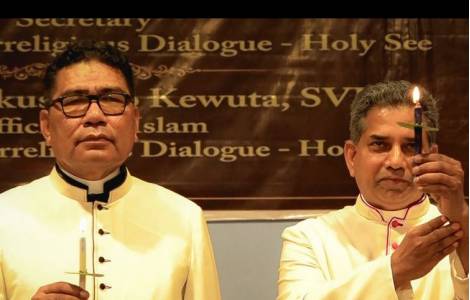
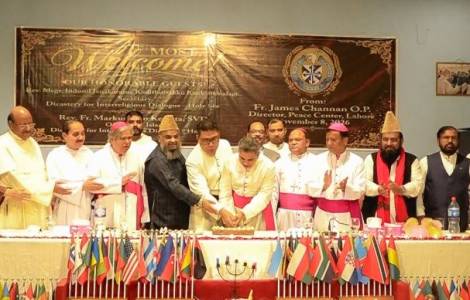
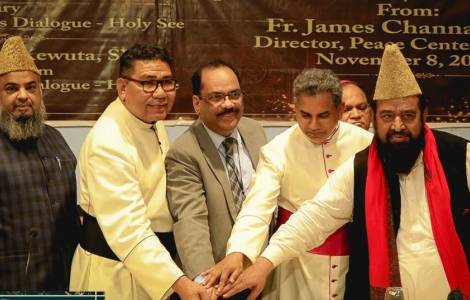
This conviction emerged clearly during the celebrations marking the 40th anniversary of the Catholic Commission for Interreligious Dialogue and Ecumenism (CCIDE) (see Fides, 10/11/2026). The events, held in several cities across Pakistan, brought together bishops, Muslim leaders and representatives of other religious communities, alongside a delegation from the Holy See’s Dicastery for Interreligious Dialogue.
For the Church in Pakistan, the anniversary is not merely an opportunity to look back on the journey so far, but also a chance to assess the country's current situation and the challenges facing interreligious dialogue today. Established in the wake of the Second Vatican Council's declaration Nostra Aetate, the Commission has sought to translate the principle of mutual respect into concrete relationships among Christians, Muslims and followers of other religious traditions.
“Dialogue is a pastoral priority”
“Interreligious dialogue as a pastoral priority for the Church in Pakistan” was the theme addressed by Khalid Rehmat OFM Cap, Archbishop of Lahore, at a meeting held in recent days in the Pakistani Punjab city.
The starting point, the Archbishop said, is the reality of a pluralistic country in which people belonging to different religions live side by side. In this context, he recalled, “as Nostra Aetate suggests, we are called to build bridges of relationship. As Christians, we are called not only to proclaim the Gospel, but also to understand people's suffering, feelings and needs, and to respond with compassion”.
According to Archbishop Rehmat, “authentic dialogue first requires knowledge: speaking about other religions on the basis of reliable information, rather than rumours, prejudices or distorted beliefs”.
Dialogue, he continued, “becomes meaningful when it enters into people's everyday lives”. In Pakistan, a country with a particularly young population, “it is essential to pay attention to young people, who are called to deepen their understanding of their own faith and that of others, and to use social media responsibly, since these platforms often become channels for spreading misunderstandings and tensions”.
Archbishop Rehmat's perspective brings back into focus one of the central challenges highlighted during the anniversary celebrations: “Making dialogue a way of life, rather than limiting it to formal occasions”.
From conversation to solidarity
Bishop Samson Shukardin also spoke about the “challenges and opportunities” facing interreligious dialogue. The Bishop of Hyderabad shared a personal experience: during Ramadan, he had invited some Muslim friends and shared with them Pope Francis' message to the Islamic world on that occasion. This simple gesture, he said, “was greatly appreciated and helped dispel misunderstandings and foster a more positive perception of one another”.
Experience on the ground also shows how difficult this journey can be. “Religious minorities,” Bishop Shukardin observed, “continue to face discrimination in employment, education and public life, restrictions on religious freedom and unequal treatment”.
Moreover, false accusations of blasphemy, acts of violence and attacks against churches and Christian homes “undermine and weaken trust between communities”. For this reason, the Bishop stressed, “dialogue must go hand in hand with justice, legal protection and respect for human rights”.
Bishop Shukardin cited a concrete example from the Diocese of Hyderabad: a member of the Commission for Interreligious Dialogue personally intervened to protect a Hindu man accused of blasphemy, accompanying him alongside the police to ensure his safety. “From this perspective, dialogue does not simply mean meeting and talking; it means standing alongside others when they find themselves in difficulty,” he remarked.
This vision broadens the scope of dialogue: “It is not only Christians and Muslims who are involved. Hindus, Sikhs and members of other religious communities are also called to take part in this process with goodwill and mutual openness”.
Particular attention, he added, “must be given to women, young people and the most vulnerable, so that dialogue remains rooted in people's everyday lives”.
Breaking down walls, building bridges
For Bishop Yousaf Sohan of Multan, President of the CCIDE, the Commission's 40th anniversary “represents a journey of hope and an opportunity to renew our commitment to peace, understanding and human dignity”.
“Dialogue,” he emphasized, “must be translated into concrete cooperation: the fight against poverty, education, vocational training, religious harmony and the formation of new generations”.
The challenge, he said, “is to move from walls to bridges”. The Commission's President stressed the need to “strengthen dialogue at the local level, create real opportunities for young people and women, consolidate cooperation between religious leaders and institutions, and turn encounters into friendship and friendship into cooperation for the common good”.
The journey, participants in Lahore acknowledged, is at times arduous. Yet the CCIDE's 40th anniversary celebrations revealed an extensive network of people and organizations across Pakistan who “continue to work to ensure that religious diversity does not become a source of division”.
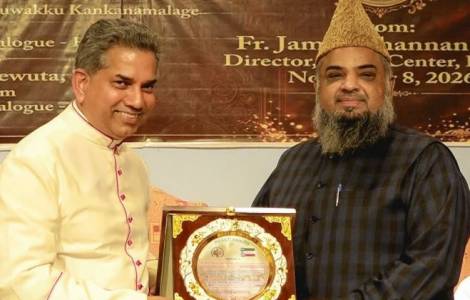
During the celebrations, 25 representatives of different communities and institutions were honored for their commitment to dialogue and religious harmony, highlighting the interreligious dimension that the Commission has developed over the years.
The Vatican delegation: dialogue as a transformation of perspective
The local efforts were accompanied, during the anniversary celebrations, by the presence of a delegation from the Holy See's Dicastery for Interreligious Dialogue.
Archbishop Indunil Janakaratne Kodithuwakku, Secretary of the Dicastery, recalled the significance of Nostra Aetate, stressing that “the obstacles to relations between religions are often not differences of faith in themselves, but rather prejudices, stereotypes and an incomplete knowledge of others”.
Dialogue, Archbishop Kodithuwakku observed, therefore requires us to “change the way we look at others, the way we speak about them and the way we relate to them”. “When others are recognized as brothers and sisters, relationships also change,” he stressed.
Father Markus Solo Kewuta SVD, an official responsible for Islam at the same Dicastery, described interreligious dialogue in a religiously plural society such as Pakistan as “no longer an option, but a necessity”.
Among the threats and challenges he identified were “extremism, the political instrumentalization of religion, prejudice, discrimination and, above all, the growing spread of disinformation, conspiracy theories and religious incitement on social media”, all of which fuel mistrust and hostility.
The response, he explained, “lies in remaining firmly rooted in one's own religious identity while remaining open to cooperation and shared responsibility”.
Archbishop Germano Penemote, Apostolic Nuncio to Pakistan, also viewed the 40th anniversary as “an encouragement for the Church's mission in the country”.
Referring to a reflection by Pope Leo XIV, the Apostolic Nuncio warned against a “culture of power” that can shape ways of thinking, relationships and even the use of resources. He pointed instead to a “culture of cooperation and dialogue” as the necessary response.
Dialogue, he added, “does not ask us to abandon our faith, but to remain firmly rooted in it while approaching the convictions of others with openness, patience, humility and seriousness”.
Representatives of the various religious communities gathered in Lahore agreed on one point: dialogue does not erase differences, but teaches us how to overcome them without turning them into hostility.
It is not merely “a method of talking”, but a “way of safeguarding people's dignity, addressing social emergencies together and building a society in which diversity becomes a source of wealth and shared responsibility”, Bishop Yousaf Sohan added.
The Commission is now looking to the future, he continued, noting that dialogue in Pakistan must become “a way of life, turning encounters into friendship and making friendship a path towards building the common good”.
The celebrations marking the CCIDE's 40th anniversary in Islamabad, Lahore and Karachi, Bishop Sohan concluded, represent “a new starting point for a Church called to walk alongside Pakistan's other religious communities, especially where coexistence is most fragile and where building bridges can make a difference”.
(Fides News Agency, 11/11/2026)