Information service of the Pontifical Mission Societies since 1927
OFM Cap Pakistan
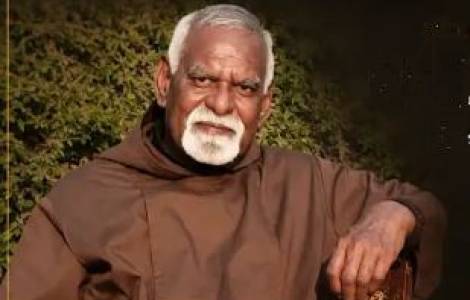
Lahore (Fides News Agency) – Father Mahboob Evarist, the first Capuchin priest of Punjabi origin in Pakistan, died on July 27, 2026, at the age of 75.
His funeral Mass was celebrated on July 28 at St. Mary's Convent in Lahore, and was presided over by Archbishop Khalid Rehmat, OFM Cap., Archbishop of Lahore, who paid heartfelt tribute to Father Mahboob's decades of dedicated priestly ministry.
Archbishop Joseph Arshad of Islamabad-Rawalpindi also recalled with affection the journey he had shared with the late friar, while Father Ajaz Bashir, OFM Cap., Custos of the Capuchin Custody of Mariam Siddeeqa (the Capuchin Province of Pakistan), described him as "a true father figure and a beloved elder brother within the fraternity."
The funeral liturgy brought together a large assembly of diocesan and religious priests, men and women religious, civil and social authorities, and countless lay faithful whose lives had been touched by his humble service.
Archbishop Rehmat recalled that Father Mahboob "embodied the Franciscan spirit of ‘minoritas,’ living in profound humility, joyful simplicity, genuine fraternity and vigilant prayer, as a true Little Poor Man of Christ in the heart of Pakistan."
"Sociable, cheerful and deeply perceptive, he possessed a captivating personality that naturally put people at ease and fostered deep bonds of fraternity," the Archbishop added.
A lasting testimony to his artistic and spiritual legacy can be found in the Holy Rosary Parish in Faisalabad, where he designed and built the Shrine of the Blessed Virgin Mary. This magnificent “Marian grotto,” Archbishop Rehmat noted, "stands today as a living monument of faith, architectural beauty and profound Marian devotion, and will continue to inspire generations of pilgrims."
"In the Franciscan spirit, Father Mahboob also nurtured a tender love for God's creation, finding divine harmony in plants and animals," Father Lazar Aslam, OFM Cap., coordinator of the Capuchins' Commission for Justice, Peace and Ecology in Pakistan, told Fides.
Father Mahboob was also a gifted writer and eloquent preacher. "He gave special attention to the Punjabi language and culture," Father Aslam recalled. "He regarded local cultural traditions as a privileged channel for the incarnation of the Gospel, skillfully weaving regional expressions, idioms and indigenous traditions into his homilies, writings and pastoral ministry, thus becoming a pioneer of the authentic inculturation of the faith."
"Father Mahboob remained a faithful witness to Christ in both word and deed, embodying the beauty of community life, contemplative prayer and Franciscan fraternity, while bringing comfort to the poor and the most vulnerable," he added.
Father Mahboob was laid to rest in the historic Capuchin cemetery of Sahowala, where many Belgian Capuchin missionaries and other Pakistani and foreign religious who devoted their lives to proclaiming the Gospel in Punjab are buried.
In a historical overview shared with Fides, Father Lazar Aslam recalled that on November 15, 1888, the Vatican Congregation of Propaganda Fide entrusted the mission territory of Lahore to the Capuchin friars of the Province of Belgium. The Belgian Capuchins sent eight priests and eight religious brothers who, in 1889, were welcomed by the first Bishop of Lahore, Msgr. Symphorien Mouard, OFM Cap.
Their missionary work began in Sialkot and the surrounding villages, where they visited communities, taught the faith and proclaimed the Word of God. Already in 1889, seventy adults received Baptism. Each missionary cared for approximately eighty villages, while the Capuchins established eighteen schools to provide education for children. Despite many hardships, the Catholic community grew to around one thousand faithful within the first year.
"This missionary work continued, by God's grace, also thanks to the invaluable contribution of the first catechists," Father Aslam noted.
Responding to the needs of the local population, the Bishop of Lahore established two important mission stations in Adah and Sahowala, where churches were built. From these centers, the Franciscan missionaries reached numerous villages, proclaiming the Gospel, distributing medicines, opening dispensaries and caring for the poor and marginalized. Many people from the poorest social classes and lower castes were drawn to Christianity.
In 1892, the diocese acquired a large plot of land to establish a stable Christian community, giving birth to the village of Mariamabad, conceived as a missionary model community where Catholic families could live together, strengthening both the Christian presence and community life.
In 1900, Father Henri Finck, known as "Father Felix," allocated farmland to several Christian families in Khushpur, which flourished and eventually became what is now widely known as the "Vatican of Pakistan." To further strengthen Christian communities and improve their living conditions, the Capuchins also founded Francisabad in 1904, Anthonyabad in 1916, and several other predominantly Christian villages.
During the “Partition” of India and Pakistan, the missionaries endured enormous hardships. With the creation of Pakistan in 1947, part of the territory of the Diocese of Lahore remained in India, but the missionary work continued uninterrupted. The Diocese of Lahore had already been divided in 1939, and further changes followed in 1947 with the establishment of the Diocese of Rawalpindi.
Today the Capuchins serve mainly in the Archdiocese of Lahore, in northern Punjab—the historic heart of their presence—and in the Archdiocese of Karachi, the major coastal metropolis of Sindh Province. The Order operates formation houses, seminaries and numerous educational institutions, while continuing to experience steady growth in Franciscan vocations. The Capuchins also continue to care for the National Shrine of Mariamabad, one of Pakistan's foremost centers of Marian devotion and pilgrimage.
In a country where Muslims make up the overwhelming majority of the population, the Capuchins continue to build relationships of peace and fraternity. Inspired by the spirit of St. Francis of Assisi, they promote dialogue with Muslim leaders, fostering interreligious understanding, social integration, peace, justice, and the protection of human dignity and fundamental rights.
(PA) (Fides News Agency, 30/7/2026)