Information service of the Pontifical Mission Societies since 1927
Diocese of Islamabad-Rawalpindi
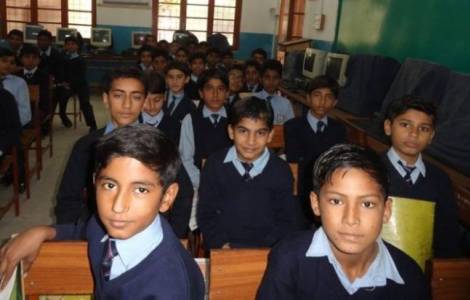
Islamabad (Fides News Agency) – Within the framework of the special “Year of the Children,” the Catholic community of Islamabad-Rawalpindi is called upon to improve the quality of education and maximize the participation of children, adolescents, and young people in educational programs, offering opportunities to the most disadvantaged and ensuring the financial sustainability of diocesan schools. This was stated by the Diocesan Education Council, which manages 45 schools in the Diocese of Islamabad-Rawalpindi, distributed between the federal capital, Upper Punjab, and Khyber Pakhtunkhwa, three districts within the diocesan territory. As reported to Fides, approximately 25,000 students attend these schools, of whom about 10,000 are Catholic and about 15,000 are non-Catholic, mostly Muslim.
In the Diocese of Islamabad-Rawalpindi, which is celebrating its special “Year of the Children” in 2026, access to literacy and higher education for young people—especially Catholics—has become a priority.
Archbishop Joseph Arshad, together with the Council, explained the five-year action plan that was recently presented: “Education, in the life of our diocesan community, is not simply a cultural pursuit, but a transformative mission that integrates faith, values, and intellectual development.” In this context, the Diocesan Council emphasized that “academic rigor, anchored in ethical and spiritual values, must remain the cornerstone of every institution,” and defined several lines of work. First, it focused on the training of competent teachers, with sustained investment in the development of their cultural, pedagogical, and didactic skills. “Motivated and well-trained teachers are essential to guaranteeing quality education in all schools,” it stated.
Secondly, the integration of technology has been identified as a key tool for improving teaching, simplifying administration, and preparing students for a rapidly changing digital world. The plan also emphasizes student support and a holistic approach to child development, addressing their educational, emotional, social, and spiritual dimensions. The Council has prioritized securing funding for scholarships for Christian students from poor or marginalized families, at the primary, secondary, and university levels. It has also stressed the importance of involving parents, parishes, and local communities in the educational process, noting that education thrives when shared responsibility and active collaboration connect schools with their surrounding communities.
In the Islamabad region, the situation of children reveals a stark contrast between the more developed urban areas and the more vulnerable peripheries, where children continue to face serious challenges. Although the capital generally shows better indicators than Pakistan's rural provinces, it is estimated that some 90,000 children (15% of the school-age population) remain outside the education system.
Nationwide, various experts warn of an “educational emergency,” marked by high levels of illiteracy and early school dropout, which particularly affects the poorest sectors, including Christian communities. According to data from the local Church, “80% of Christian children are illiterate.” This is compounded by the persistence of child labor in domestic work and the informal economy. (PA) (Fides News Agency, 3/6/2026)