Information service of the Pontifical Mission Societies since 1927
by Luca Mainoldi
Rome (Fides News Agency) – On the occasion of the publication of Pope Leo XIV's first Encyclical on Artificial Intelligence (AI) on May 25, its impact on the consumption of natural resources should also be considered. AI is not a simple algorithm, but a complex system comprising data centers, fiber optic cables, power and cooling systems, and much more. In short, artificial intelligence consists not only of data and algorithms, but of a significant physical infrastructure – not just bits, but atoms.
In the United States, local communities are already feeling the effects of the increasing proliferation of AI data centers. As of January 2026, over 3,900 data centers were registered in the US, representing 37% of the total worldwide. This figure illustrates the gap between those who control the physical infrastructure and those who merely use it. Furthermore, large American companies in the industry own and operate data centers in various parts of the world. The biggest drawback is the high electricity consumption, which places a heavy burden on local communities. “A single modern AI data center can consume as much energy as 100,000 homes; the largest currently under construction will consume up to 20 times that amount” (Source: Carla Walker and Ian Goldsmith, “From Energy Use to Air Quality: The Many Ways Data Centers Affect US Communities,” World Resources Institute, February 17, 2026). Added to this is the enormous water demand for cooling the circuits in data centers. Medium-sized facilities can consume up to 1,135,623 liters of water per day, while large facilities require up to 18,927,000 liters per day—an amount equivalent to the consumption of a small town. Recent estimates suggest that US AI data centers could require more than 121 billion liters of water annually by 2028. This amount is sufficient to meet the drinking water needs of approximately 360,000 families. (Ibid.) The development of AI infrastructure requires large quantities of critical minerals: from rare earth elements to copper, aluminum, cobalt, and graphite, among other raw materials. Major powers and AI companies are competing for these minerals, which are essential not only for AI but also for the development of renewable energy and weapons systems. According to the International Energy Agency (IEA), the growth of data centers could increase global demand for copper by about 2%, for rare earth elements by 3%, and for gallium by up to 11% by 2030. For example, an additional 512 tons of copper will be needed for data centers by 2030, while the IEA forecasts a global copper shortage by 2035. Besides China, which dominates the extraction and processing of rare earth elements, Africa is a key market for major powers and AI companies. Africa possesses 30% of the world's reserves of critical minerals essential for electronics and AI hardware, but accounts for only 10% of the global revenue generated from these resources.
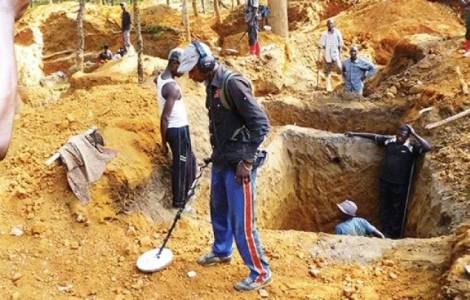
The continent is rich in minerals such as cobalt, lithium, and graphite, all of which are crucial for the development of artificial intelligence. The Democratic Republic of Congo plays a key role, holding the world's largest cobalt reserves as well as other strategic minerals (see Fides, 1/2/2023). Zimbabwe also has significant lithium deposits, essential for lithium-ion batteries used not only in electric vehicles but also in data centers (for more on African lithium, see Fides, 19/8/2023). Another important raw material is graphite, of which countries like Madagascar and Mozambique possess significant deposits. To diversify their rare earth supply and reduce their dependence on China, several Western countries are exploring for new deposits in Africa. South Africa, already a major supplier of platinum group metals, is considered a significant alternative source of rare earth elements (REE). The country has several known deposits, primarily of monazite and other minerals such as apatite and euxenite, concentrated in the Western Cape, Northern Cape, and Limpopo regions. Other African producers of rare earth elements include Madagascar and Burundi (see Fides, 25/9/2015), while mining projects have been initiated in Angola, Malawi, Namibia, Tanzania, and Uganda. Kenya and Zambia are among the countries with potential rare earth element deposits. The extraction of these minerals causes serious environmental damage: massive production of toxic and radioactive waste; water and soil pollution from the use of toxic substances in extraction and leaching, as well as the discharge of processing waste; air pollution from radioactive dust and emissions from the production processes; and deforestation, soil erosion and loss of biodiversity. As the then-President of the Congolese Bishops' Conference, Archbishop Marcel Utembi Tapa of Kisangani, explained in an interview with Fides: “The environmental consequences of the exploitation of Congolese mineral resources are immense and serious, as it is carried out without adherence to the rules” (see Fides, 10/11/2023). (Fides News Agency, 23/5/2026)