Information service of the Pontifical Mission Societies since 1927
OMI Pakistan
Lahore (Agenzia Fides) – Hostilities between Pakistan and Afghanistan have escalated into “open war,” Pakistani Defense Minister Khawaja Asif declared. Mutual attacks and military escalation between Pakistan and Afghanistan have led to a widespread conflict between the former allies. According to the government in Islamabad, the breakdown stems from Kabul’s refusal to neutralize the locations and bases along the border where terrorists who carry out attacks in Pakistan are hiding. This “open war” effectively ends the mutual security agreement signed in Qatar in October 2025, in which Kabul pledged to eliminate terrorist groups on its territory in exchange for Islamabad ceasing its cross-border bombing campaign. The renewed fighting began on February 22 with a Pakistani airstrike on Afghan soil, which in the following days also hit Kabul and Kandahar. In response, the Afghan attacks in Abbottabad and near Islamabad represent the Emirate's largest airstrike outside the border area.
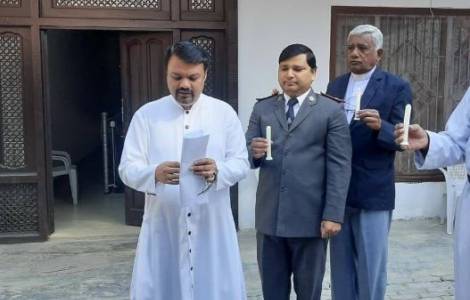
At the center of the conflict is the Tehrik-e-Taliban Pakistan (TTP), the so-called "Pakistani Taliban," a group that has intensified its violence and terrorist attacks on Pakistani soil. The Afghan Taliban's refusal to stop the TTP has led the military command in Islamabad to consider dialogue a failure and instead to carry out direct bombing raids on "TTP sanctuaries" in Afghanistan. “Tensions have been fueled by Pakistan’s accelerated expulsion of over one million Afghans who had settled in Pakistan since the Soviet invasion of Afghanistan in the late 1970s,” Father Cecil Paul, a Pakistani missionary of the Oblates of the Immaculate Virgin Mary, historian and advisor to the OMI province in Pakistan, and director of the Oblate Media Center in Pakistan, told Fides. “Millions of Afghan refugees have found refuge in Pakistan in the past, settled here, found work, and integrated into society. However, criminal activities such as drug trafficking, human trafficking, and terrorism have increased among them. Therefore, the Pakistani government has now chosen the path of deportation. The Afghans now harbor hatred and hostility and appear to be resorting to violence in retaliation. Hence the escalation,” the Pakistani clergyman noted.
“Public opinion in Pakistan currently seems divided,” observes Father Cecil Paul. “On the one hand, there are those who believe there should be no war against our Muslim brothers in Afghanistan; on the other hand, there is a consensus, particularly in military circles, on a tough response to stop the terrorists who have killed and continue to kill members of the armed forces and civilians in Pakistan.” “As Christians in Pakistan, we are always committed to peace. We are peace-loving people. We reject all forms of violence, terrorism, and war. We call for peace and ask the faithful to pray for us: We also pray for our enemies, as Jesus teaches us, and we try to bear witness to peace,” the Oblate missionary concluded. (PA) (Agenzia Fides, 27/2/2026)