Information service of the Pontifical Mission Societies since 1927
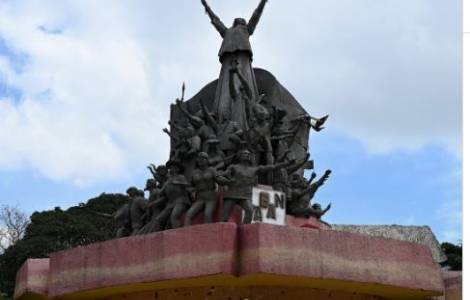
Edsa Archive
Manila (Agenzia Fides) – "For 40 years, the Philippine education system has failed to convey the spirit of the EDSA revolution. Textbooks do not fully explain what happened during the dictatorship of Ferdinand Marcos Sr., and the violence and serious human rights violations are overlooked. As a result, new generations lack an awareness of the significance of this dark period," Jesuit Father Albert Alejo, anthropologist and lecturer at the Faculty of Social Sciences of the Pontifical Gregorian University and Ateneo de Manila University, told Fides. The Philippines is commemorating the 40th anniversary (February 23–25, 1986) of the so-called EDSA revolution. In 1986, over two million people peacefully demonstrated on Epifanio de Los Santos Avenue (EDSA) for the resignation of dictator Marcos, who fled abroad. The regime ended without bloodshed. “In 1986,” recalls Father Alejo, “we experienced a glorious moment with the People’s Revolution. It was a blessing, a promise, a challenge. Thanks to the non-violent demonstration, a new phase began in the country’s history, and a new constitution in 1987 gave the country a more democratic character and a more democratic vision, creating space for civil society.” “While reforms were initiated,” the Jesuit continues, “many were not fully implemented in the following years. For example, crony capitalism persists, as do the numerous political dynasties, some of which are regional. The education system also failed to integrate the spirit of that era into textbooks, so that new generations are convinced that the dictatorship wasn’t so bad after all.” “One could say that the preservation of the original commitment was neglected, and that is why it failed,” he observes, especially since the attempt at “historical revisionism,” which aimed to erase the Philippines’ dark past from the national narrative, appears to have been successful in some respects. At that time, Father Alejo recalls, “the Catholic Church played a leading role in the struggle to defend and promote human dignity at all levels.” “Today,” he continues, “the spirit of the EDSA revolution presents a challenge and a responsibility. Today, a new opportunity presents itself to the entire nation. The Catholic Church, which continues to be a moral compass, also bears a great responsibility.” “The anti-corruption movement that emerged in the Philippines last year— in the wake of scandals surrounding natural disaster prevention projects that were funded but never implemented—is connected to this and calls us to fight the true enemy: negligence and indifference. It is time to take responsibility, and every Catholic, the entire Christian community, plays a crucial role,” Father Alejo concluded. (PA) (Agenzia Fides, 24/2/2026)