
Information service of the Pontifical Mission Societies since 1927
Casa editrice Rotas
Kampala (Agenzia Fides) – “Without a doubt, the martyr Father Raffaele has been and continues to be a gift to our diocesan Church. A man of great freedom and great love for every person. Despite the dangers and the growing hostility of his adversaries, despite the fear and threats, he carried on his apostolate as a brother, friend, and priest, as ‘Loribamoi,’ a man who creates communion in the Ugandan language.” Thus writes Archbishop Leonardo D’Ascenzo of Trani-Barletta-Bisceglie in the introduction to the book “Rafa’s Dream: Father Raffaele Di Bari, a missionary forever in his Africa.” The book, written by Maria Antonietta Binetti and published by Rotas, presents readers with the human and spiritual profile of Father Raffaele Di Bari, a Comboni missionary in Uganda, originally from Barletta, who was ambushed and killed on October 1, 2000, while on his way to celebrate Mass and baptisms in Acholi Bur, a village in his parish.
Born in 1929, Raffaele Di Bari was ordained a priest in 1956 and immediately expressed to his superiors his desire to be sent to Africa, a wish that was fulfilled within three years. An enthusiastic missionary, with a courageous and generous personality, he arrived in Uganda in 1959 and remained there for more than forty years, until his death, combining evangelization with tireless work in human development. He introduced mills to the area, built schools and chapels, promoted the work of catechists, distributed hoes and plows for cultivating the land, encouraged the cultivation of rice, corn, and sunflowers, and facilitated studies abroad for numerous young people. But above all, he never ceased denouncing the injustices, violence, and abuses committed by the oppressors of the people he had made his own.
He survived several assassination attempts, and just days before he was murdered, in a telephone interview with MISNA (Missionary Service News Agency), then directed by his fellow confrere, Father Giulio Albanese, he declared: “In all my years in Africa, the greatest mission the Lord has entrusted to me has been to give voice to these people, denouncing the atrocities that the rebels commit almost daily against the elderly and children.”
Struck by a burst of gunfire, Father Rafa died instantly. The car he was traveling in was set on fire, and the priest's body suffered the same fate. In the afterword to the book, Father Albanese writes: “I can declare without reservation that our confrere was killed for the sake of the Gospel of our Lord Jesus Christ. For the Good News that prophetically compelled him to stand with that suffering humanity which, in that particular historical context, was being sacrificed on the altar of human selfishness. The people of Pajule (the mission where he lived and where he was buried) still venerate him as a saint today. The same young rebel from the LRA (Lord's Salvation Army) who shot him on October 1, 2000, confessed to me in an interview that he owes his conversion to Father Raffaele. This young man benefited from the amnesty granted by the Ugandan president and spent time at the Kitgum mission.
It was Father Tarcisio Pazzaglia, a faithful missionary companion, who introduced me to him.” The book begins by focusing on Father Tarcisio, Father Giulio, and Father Carlos, opening with a very intense scene that took place exactly one year after the death of Father Raffaele Di Bari.
The three Comboni missionaries, along with a journalist—a character invented by the author as a narrative device to tell Father Raffaele's story—are about to be executed by firing squad when the unexpected happens: the commander of the firing squad recognizes Father Giulio Albanese, who had been one of his altar boys in Kampala. They are all freed, and in the book's afterword, Father Albanese attributes this liberation to the intercession of Father Raffaele, whom he had invoked in prayer during that terrible moment.
The book, which also has an illustrated version for children, brings together the “geography of places and the heart” of Father Raffà, as described by Father Ferdinando Cascella, former director of the Diocesan Missionary Center of Trani-Barletta-Bisceglie, and concludes with a prayer written by Father Raffà himself, which we publish below:
“My son,
who are on this earth,
worried, sad, and tempted,
I call you by name,
I know you and I love you.
Do not be afraid,
you will never be alone,
I will always be by your side, together we sow the seed of life
that I leave you as an inheritance.
I only wish that you fulfill
my will.
Do not worry:
I will give you food each day
to share with your
poorest neighbor, in solidarity.
You must know that I forgive you every sin
even before you commit it;
I only ask that you forgive all those who offend you. So as not to succumb to temptation,
take my hand
with strength and trust.
I will free you from evil,
my son,
so dear to me.”
(EG) (Agenzia Fides, 17/1/2026)



 "Why are you here?": the legacy of a Korean missionary in Mongolia
 "Like clay in the hand of the potter". Work on the "Positio" in the Cause for Canonization of Father Emiliano Tardif begins
 Condolences from the Dicastery for Evangelization for the death of Bishop Osório Citora Afonso
 Slovakia celebrates the memory of Veronika Racková, the nun and doctor killed 10 years ago in South Sudan
 Assembly of the Pontifical Mission Societies: Archbishop Nwachukwu invites us to proclaim the Resurrection of Christ to the world, following the example of the martyrs
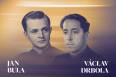 Amidst persecution, a story of grace. Beatification of the martyred priests Bula and Drbola on June 6
 The 2026 General Assembly of the Pontifical Mission Societies begins
 Cardinal Chow at the exhibition marking the 80th anniversary of the diocese's foundation: our joy is in being able to share the joy of the Gospel with Hong Kong