Information service of the Pontifical Mission Societies since 1927
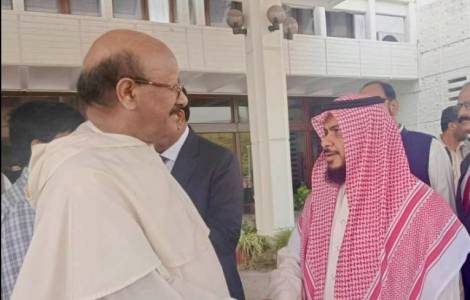
Peace Center Lahore
by Paolo Affatato
Lahore (Fides News Agency) – Forty years of Christian-Muslim dialogue in Pakistan, marked by difficulties, challenges and tangible achievements. Established in 1985 within the Catholic Bishops’ Conference, the National Commission for Christian-Muslim Dialogue, known as the “Rabita” Commission (meaning “connection”), and now called the Catholic Commission for Interreligious Dialogue and Ecumenism (CCIDE), has accompanied the Pakistani Church for four decades in its efforts to build relationships with the Muslim community and other religious traditions in the “Land of the Pure”.
Its establishment followed a specific request made by Saint John Paul II to the Bishops of Pakistan after their 1984 ad limina visit, and was in line with "Nostra Aetate," the Second Vatican Council document on the Church's relations with other religions.
Forty years later, interreligious dialogue in Pakistan has developed into a broad and widely recognized network: the government has established Interreligious Harmony Commissions at both federal and provincial levels; the principles of harmony have been incorporated into school curricula; and interreligious conferences and initiatives are being promoted in various parts of the country.
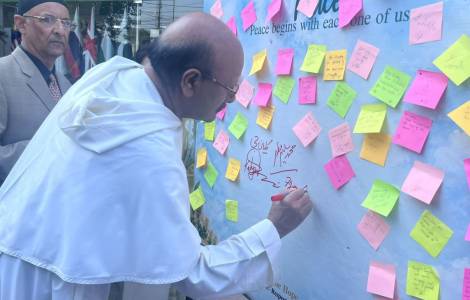
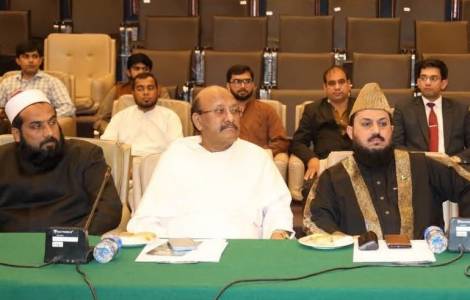
These are some of the advances highlighted in an interview with the Fides News Agency by Dominican Father James Channan OP, former Executive Secretary of the “Rabita” Commission and currently Director of the Peace Center in Lahore, an institution actively engaged in promoting interreligious dialogue.
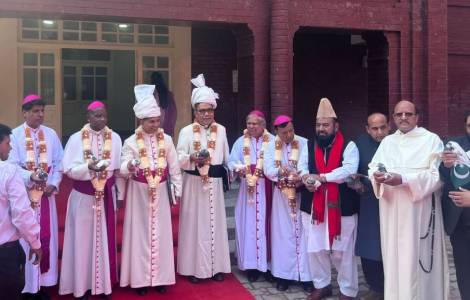
Adding significance to this anniversary is the official visit to Pakistan of a delegation from the Holy See’s Dicastery for Interreligious Dialogue, which is in the country from 6 to 14 November 2026, with stops in Islamabad, Lahore and Karachi. The delegation includes Monsignor Indunil Janakaratne Kodithuwakku Kankanamalage, Secretary of the Dicastery, and Father Markus Solo Kewuta SVD, an Official responsible for relations with Islam within the same Dicastery.
The visit, which includes a series of meetings and celebrations, is centred on the theme: “Building Bridges for Harmony: Four Decades of CCIDE and the Future of Interreligious Dialogue in Pakistan”.
To mark 40 years of dialogue, Fides News Agency asked Fr Channan a few questions:
Father Channan, forty years of the Rabita Commission: what is the most important achievement of this long journey?
The most important achievement is this: what in 1985 seemed a new and little-known concept – namely, the need for and urgency of Christian-Muslim dialogue – is now widely recognized as a dimension of Pakistani society.
When we began, together with Bishop John Joseph, we were aware that we needed to foster a culture of dialogue at the local, diocesan and national levels. We therefore built a network in the six dioceses that existed at the time, organizing meetings, seminars and conferences, and establishing relationships with religious and political leaders, representatives of civil society and members of the judiciary.
It was a slow and, at times, arduous task, but we never ceased to believe in it, encouraged by the fact that this was something called for by the Second Vatican Council and subsequently by Pope John Paul II.
So the first achievement was the creation of a network?
Yes. The Commission grew from a small core group into what I once described as “a great tree whose branches stretch across the entire country”. This is one of the most significant fruits of forty years of work.
Today, dialogue is no longer confined to a few experts or individual initiatives. There is now a network of people and institutions actively promoting it, and its results can be seen in a cultural shift and in growing awareness among people.
We consider this a very important achievement, one that can help shape the future of the country.
What are the most tangible results achieved through this work of dialogue?
The Commission has sought to link dialogue to people's everyday lives and to the defence of human dignity and equality.
Together with Muslim leaders who shared our concerns, we addressed highly sensitive issues, including separate religious electoral systems, the inclusion of religious affiliation on identity documents, and the abuse of blasphemy laws. We also spoke out against forced conversions and marriages.
In some cases, we achieved concrete results, including the release of people who had been unjustly accused of blasphemy.
But these achievements are the outcome of a change in mindset. I believe that simply working together – Muslims and Christians – to combat discrimination, inequality and injustice is already a very significant achievement, one that gives us hope for the future.
Do you see the fact that even state institutions now recognize the importance of interreligious dialogue as another sign of maturity?
It is a very important step. Today, the Government of Pakistan explicitly recognizes the importance of interreligious dialogue and has established Interreligious Harmony Commissions at both federal and provincial levels.
The principles of interreligious harmony have been incorporated into school curricula and are taught in schools, although some challenges remain.
Furthermore, conferences are organized at national, provincial and district levels, as well as interreligious celebrations on various occasions.
These developments show that the work begun forty years ago has left its mark, and we are greatly encouraged by them.
Among the initiatives that have made a lasting impact is also Aman Ka Safar, the “Journey for Peace”, held in 1999–2000. Could you recall what that experience represented?
It was an extraordinary experience. It lasted twelve days, from 22 December 1999 to 4 January 2000, covering approximately 1,200 miles across Pakistan, from the mausoleum of Muhammad Ali Jinnah to Bab-e-Khyber.
There were peace rallies, conferences, concerts, press meetings and other events. Thousands of people took part, belonging to different Christian denominations, as well as Muslim, Hindu, Sikh, Parsi and Bahá’í communities. Government representatives also participated in the meetings.
It was a concrete way of demonstrating that peace and harmony are not merely words: they can be experienced together in everyday life, through human relationships and even through a shared relationship with God.
Looking at the situation today, what are the main difficulties and challenges that interreligious dialogue in Pakistan still has to address?
The fundamental challenge is education. In Pakistan, 96 per cent of the population is Muslim, while Christians constitute a small minority.
Prejudice against minorities still exists, and there is not always a genuine awareness of the importance of dialogue, among both Christians and Muslims.
Many Christians, particularly those from poorer backgrounds, also experience a sense of insecurity and almost a feeling of “inferiority” in their relationships with Muslims. This is why we must educate young people, families, seminarians and priests in dialogue, starting together from the dignity of every human person and our dignity as children of God.
The visit of the delegation from the Holy See’s Dicastery for Interreligious Dialogue comes at a particularly significant moment. What can this encounter bring?
It can help us reflect on the journey we have travelled and, above all, look towards the future.
The visit takes place in the context of the Commission’s fortieth anniversary and brings with it a fundamental question: how can we make dialogue even more effective in today's Pakistan?
Christian-Muslim dialogue is important not only for bilateral relations, but also for addressing social issues such as peace, religious freedom, human dignity and the protection of minorities.
We need to continue building bridges so that these values can be shared and respected by everyone. In this process, we feel the support of the Holy See, which strengthens us in both our faith and our commitment.
What, then, is your hope for the next forty years?
My hope is that dialogue will increasingly become a “way of life”.
We hope and work towards a future in which Christians and Muslims listen to one another with respect, learn to cooperate and address together the major challenges before us: poverty, migration, illiteracy, extremism, violence, persecution and discrimination.
If we join forces, we will be better equipped to face these challenges.
Dialogue does not mean renouncing one's own faith. It means reaching out to others, listening to one another, and offering mutual support with respect and conviction.
This, ultimately, is the dream that has inspired the Rabita Commission from the very beginning: to build bridges of hope, reception, love, cooperation, peace and harmony.
After forty years, we can say that some of these bridges are now firmly established. The task of the younger generations will be to continue crossing them and to build new ones.
(Fides News Agency, 10/11/2026)
Peace Center Lahore