Information service of the Pontifical Mission Societies since 1927
Archdiocese of Colombo
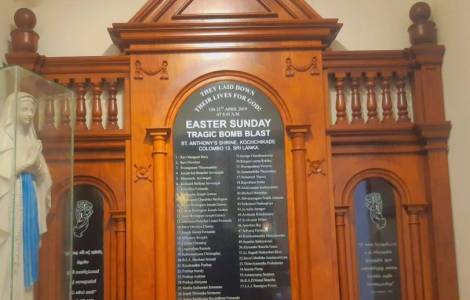
Colombo (Fides News Agency) – Fifteen of the 24 defendants have been convicted in the trial concerning the attacks of 21 April 2019, Easter Sunday, which targeted three churches and three luxury hotels in Sri Lanka, killing 279 people, including 45 foreigners. Today, 22 September, the Colombo High Court delivered its verdict against 15 men accused of involvement in the attacks.
Among those found guilty is Mohamed Naufer Moulavi, identified by the prosecution as a key figure linked to the organization of the attacks. The other nine defendants were acquitted and ordered to be released.
The court handed down its verdict at the conclusion of a trial that lasted nearly five years and involved more than 23,270 charges relating to the attacks, including murder, conspiracy to commit acts of terrorism, and the possession of firearms and explosives under the Prevention of Terrorism Act. The verdict and relevant sentences (which could include the death penalty) in what has been the main criminal proceeding against those accused of planning or co-organizing the attacks, the deadliest attacks against civilians in Sri Lanka’s history.
Mohamed Naufer Moulavi was identified as the leader of the group that provided support to the eight-member suicide commando that carried out the attacks. The trial took place alongside a separate investigation into allegations that certain elements within Sri Lanka’s state apparatus may have had links to those responsible for the attacks. According to evidence presented during the trial, investigators allege that the network was created to generate a security threat that would strengthen political support for the Rajapaksa family. Gotabaya Rajapaksa, a former defence minister, was elected president several months after the attacks. According to the theory developed by investigators, the aim was to create chaos and present Rajapaksa – the politician who led the country to victory over the Tamil separatist rebels in 2009 – as the leader best suited to restore security. Rajapaksa and his supporters have rejected allegations of involvement.
Given the massacres at the churches, the trial has directly involved Sri Lanka’s Catholic community which, under the leadership of Cardinal Malcolm Ranjith, Archbishop of Colombo, has consistently reiterated its call for “truth and justice”. Catholics have repeatedly called for those who ordered the attacks, as well as any political or intelligence complicity and the sources of funding and training for the terrorists, to be identified.
In recent years, they have persistently called for the appointment of an independent prosecutor to accelerate the investigations and ensure their impartiality, stressing the urgency of the matter to the Rajapaksa and Wickremesinghe governments and, more recently, to the government of Anura Kumara Dissanayake, who was elected in 2024. They have also repeatedly reminded political leaders of their commitment to uncovering the truth.
This campaign has included demonstrations, human chains, commemorative masses and prayer gatherings, and has brought the issue to the international level. At the same time, Catholics have always defended interreligious coexistence and urged the faithful not to seek revenge against the Muslim community, stressing that the attacks must not lead to ethnic or religious conflict.
(PA) (Fides News Agency, 22/9/2026)