Information service of the Pontifical Mission Societies since 1927
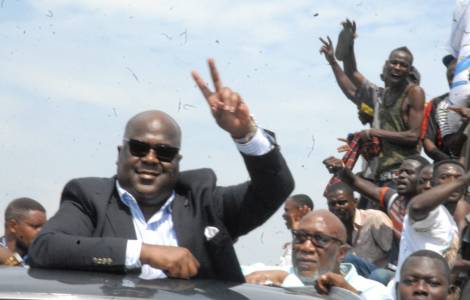
Kinshasa (Fides News Agency) – As the national dialogue launched by President Félix Tshisekedi continues (see Fides, 23/7/2026), one of the central issues remains the persistent insecurity in the eastern Democratic Republic of the Congo, particularly in the provinces of North and South Kivu, where numerous armed groups continue to operate. The most significant among them is the M23 movement, which has taken control of large areas of both provinces.
The M23 receives support from Rwanda, which justifies its presence in the region as a defensive measure against the Democratic Forces for the Liberation of Rwanda (FDLR), an armed Rwandan group founded more than three decades ago by former Hutu fighters linked to the 1994 genocide.
To address the FDLR issue, the Congolese government committed itself—first within the framework of the Luanda Process and later under the Washington agreements signed in 2025 with the mediation of the United States and Qatar (see Fides, 27/6/2025)—to their "irreversible and verifiable neutralization," in parallel with Rwanda's disengagement and the opening of negotiations with the M23.
However, no effective neutralization of the FDLR has yet taken place. The mid-July deadline set for achieving significant progress passed without any substantial developments on the ground.
Faced with this impasse, President Félix Tshisekedi's government appears to be placing increasing emphasis on the diplomatic track, promoting an alternative approach: a memorandum of understanding on the demobilization of the FDLR, presented to international partners as a practical path forward.
The strategy was outlined by the Minister for Regional Integration Floribert Anzuluni, who in mid-July embarked on an intensive diplomatic mission that took him to Uganda, Togo, Burundi, Tanzania, Brussels on July 20, and Paris on July 21–22. The objective was to present the proposed demobilization protocol and secure the international support needed for its implementation.
In the background remains the Trump administration's strategic interest in ending instability in eastern DR Congo in order to facilitate large-scale exploitation of the region's vast reserves of strategic minerals, regarded as essential for the United States' high-technology and defense industries.
Against this backdrop, Washington is expected to increase pressure on the Rwandan government, which has maintained significant influence in eastern Congo for more than three decades. It is within this context that the appointment of the new U.S. ambassador to Kigali should be understood: rather than a career diplomat, the administration has chosen a former CIA official with extensive experience in conflict zones, considered well equipped to navigate the complex dynamics and strategies of the region's many actors.
(L.M.) (Fides News Agency, 24/7/2026)