Information service of the Pontifical Mission Societies since 1927
AICU
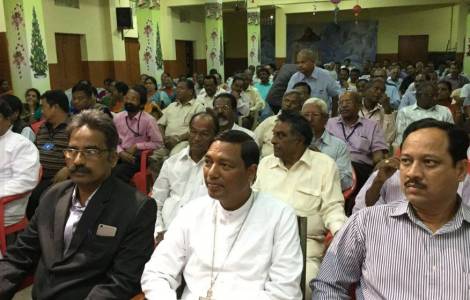
New Delhi (Fides News Agency) - At the invitation of the Catholic Bishops' Conference of India (CBCI), Indian Catholics will celebrate a national Day of prayer on June 28, 2026, to protect social and charitable works threatened by a new Foreign Contribution Regulation Amendment Bill 2026 (FCRA). The bill, expected to be debated and passed during the summer session of Parliament (June 21 to August 21), has raised concerns about its impact on charitable services, as well as the educational, health, and social activities of Christian and non-Christian organizations.
“The Church in India has always served society, especially the poor and marginalized, as an expression of the evangelical values of love, justice, and mercy,” writes Cardinal Anthony Poola, Archbishop of Hyderabad and President of the Pakistani Bishops' Conference, in a letter urging parishes to organize days of prayer and fasting. Dioceses and communities are also preparing a memorandum to be submitted to the central government. It will gather signatures from believers and "all people of goodwill" to express concerns and highlight the potential negative impact of the law.
"The Foreign Contribution Regulation Amendment Bill 2026, introduced by the Bharatiya Janata Party (BJP), could harm many organizations and charities. The government will be able to divert funds intended for social purposes and use them for its own ends," Father Cedric Prakash (SJ), an Indian writer and columnist based in Gujarat, told Fides, explaining the opposition from large segments of civil society and religious communities.
The Foreign Contribution Regulation Amendment Bill 2026 amends and supplements the legal framework of the Foreign Contribution Regulation Act of 2010. This law regulates the receipt and use of foreign funds by non-governmental organizations (NGOs), associations, foundations, and other non-profit entities. The new document was approved by the Cabinet in March 2026 and submitted to the Lok Sabha (the lower house of the Federal Parliament) for debate and approval on March 25, 2026.
According to the government, the bill aims to close loopholes in the law governing assets created with foreign funds and to simplify the accountability of NGO officials. The most controversial aspect of the bill is the creation of a new “Designated Authority” to be appointed by the central government. This authority will be able to assume temporary or permanent control over foreign donations and assets (including buildings, schools, hospitals, and other infrastructure constructed in part or wholly with foreign funds) if an organization’s registration under the FCRA is canceled, transferred, invalidated, terminated, or expires for any reason (including automatically).
According to the law, the agency is responsible for overseeing, managing, and disposing of these assets and is authorized to administer them and use the funds for unspecified "public purposes." However, Father Prakash notes, "If an organization's registration is later renewed or reinstated, the funds and assets will not be returned to the organizations that received them." The entire spectrum of opposition parties has unanimously called for the withdrawal of the bill. During the debate—which also generated numerous comments and opinions in the Indian media—some analysts raised concerns about its unconstitutionality. According to the Indian Constitution, the state may only acquire private property through a valid and sufficiently justified law, for a public purpose, and against reasonable compensation.
The bill drew criticism from intellectuals, academics, NGO staff, religious leaders, and members of civil society. Religious communities, including the Catholic Church, also participated in the debate within Indian society. Indeed, Indian Catholic institutions and religious congregations (like all religious institutions with an international structure and orientation) receive numerous donations from abroad. Meanwhile, the BJP government led by Narendra Modi postponed the debate and vote in the Lok Sabha due to political tensions and criticism from the opposition. The bill is currently before Parliament. However, the bill was not withdrawn by the government. It is therefore possible that it will be put to a vote again during the summer session. The Indian Jesuit notes: “The existing FCRA rules and regulations are already extremely strict and equipped with numerous control mechanisms; further tightening is unnecessary. The government has already suspended, revoked, or not renewed the FCRA registration of several social NGOs, many of which belong to minority groups.” “The new regulations,” the priest continues, “deal a severe blow to numerous charitable and social projects. These include healthcare, education, community development, women’s empowerment, child protection, combating human trafficking, disaster relief, emergency aid, and rehabilitation. Should this law come into effect, millions of beneficiaries would suffer.” “The new regulations,” the priest continues, “deal a severe blow to numerous charitable and social projects. These include healthcare, education, community development, women’s empowerment, child protection, combating human trafficking, disaster relief, emergency aid, and rehabilitation. Should this law come into force, millions of beneficiaries would suffer.” “Thanks to the extraordinary work of these institutions, the poor and marginalized, victims of natural disasters, the disabled, the needy and dying, as well as other vulnerable groups in society, receive support for a more dignified and just life based on constitutional principles. As Indian citizens, Christians and others, we demand the complete repeal of this law,” Father Prakash concluded. (PA) (Fides News Agency, 19/6/2026)