
Information service of the Pontifical Mission Societies since 1927
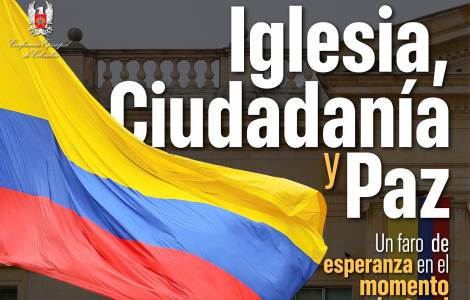
Bogotá (Fides News Agency) – With the presidential elections scheduled for May 31 in Colombia, bishops and Catholic organizations have launched initiatives to promote responsible voting. If no candidate achieves an absolute majority, a runoff election is planned for June 21, 2026. The Bishops' Conference laments an escalation of violence in the southwest of the country, particularly in the departments of Cauca, Valle del Cauca, Nariño, Huila, and Meta. In a statement issued on April 27, the bishops expressed their concern about the humanitarian situation resulting from the armed conflict, which is affecting the civilian population and especially vulnerable communities. They emphasized that such events undermine the fundamental conditions for democratic coexistence. Furthermore, they affirmed: “Nothing justifies violence.” For this reason, the prelates, through the Episcopal Service for Forgiveness, Reconciliation, and Peace (SERP)—an organization founded in 2023 by the Colombian bishops to coordinate Church initiatives for reconciliation and peace—organized three online seminars, accessible via the Colombian Episcopal Conference's (CEC) YouTube channel and Facebook page, under the title: "Church, Citizenship and Peace. A Beacon of Hope in Election Time." The aim is to offer decision-making tools inspired by the Gospel and the Church's social teaching, in order to strengthen civic engagement and the common good in elections. At the close of the 120th Plenary Assembly of the Episcopal Conference, held in Bogotá in February 2026, the bishops reiterated that citizens are called to participate in elections “in freedom of conscience and without any coercion or corruption.” They called on voters to experience the electoral process in a climate of democratic accountability and to reject all forms of violence, disinformation, and polarization. In this spirit, the Diocese of Palmyra in the southwest of the country, in a region affected by violence, published the brochure "Politics is the Highest Form of Charity." This pastoral guide offers criteria for decision-making in elections in light of the Church's Magisterium. The document provides guidelines for responsible voting and calls for conscious choice, the fight against misinformation, and the strengthening of a democratic culture based on respect and dialogue. The three online seminars organized by the Bishops' Conference are intended to "support the faithful and all citizens in exercising their right to vote freely and in an informed manner." They offer analytical tools in light of pressing political and social challenges. Experts in pastoral care, social teaching, and social sciences address questions of ethics in public life, Christian judgment, and civic responsibility. The first seminar, entitled “Politics as a Vocation: Evangelizing Politics in the Light of Faith,” took place on Monday, May 11, with the participation of Bishop Héctor Fabio Henao Gaviria, the Bishops’ Conference’s delegate for Church-State Relations. The series continues on May 18 with the webinar “Conscientious Decision-Making: Voting, Reconciliation, and the Common Good,” which focuses on the ethical evaluation of voting behavior in light of justice, reconciliation, and peace. The series concludes on May 25 with the seminar “Voting with Hope: A Free, Informed, and Peaceful Decision,” which aims to encourage citizens to exercise their right to vote with inner freedom. The Bishops’ Conference emphasized that the Church does not endorse political parties or candidates, but rather accompanies the development of voters’ moral conscience, convinced that “political participation is a concrete expression of charity and commitment to justice.” (LGR) (Fides News Agency, 16/5/2026)



 AMERICA/PERU - Apostolic Vicariate of Iquitos issues urgent appeal to curb spread of illegal mining in the Amazon
 ASIA/SOUTH KOREA - The journey toward WYD 2027 crosses paths with the Church’s social doctrine
 Tomáš Halík at the FABC Assembly: «The future of Christianity will depend upon whether our communities become places where people truly learn to see»
 AFRICA/ALGERIA - Record of abstention in Algeria's legislative elections
 AMERICA/COLOMBIA - The results of the legislative elections reveal new trends ahead of the presidential elections
 Defending land means defending life: Latin American Churches Stand alongside communities in mining conflicts