Information service of the Pontifical Mission Societies since 1927
ACS Italia
Niamey (Fides News Agency) – Abandoned villages, closed churches, faithful forced to flee and priests unable to reach their communities. The advance of jihadist groups across the Sahel is placing the presence of the small Catholic Church in Niger at risk, particularly in regions most exposed to violence.
In a country with a population of approximately 27–29 million, overwhelmingly Muslim, Christians represent a very small minority. According to Open Doors, an organization that supports Christians persecuted for their faith, there are approximately 75,000 Christians in the country, while Catholics are estimated to number between 25,000 and 50,000, concentrated mainly in the Archdiocese of Niamey and the Diocese of Maradi.
In recent years, the security situation has deteriorated significantly. In the western region of Tillabéri, in the tri-border area where Niger, Mali and Burkina Faso meet, the Islamic State in the Sahel (IS-Sahel) is particularly active. In the eastern region of Diffa, meanwhile, Boko Haram and the Islamic State West Africa Province (ISWAP) operate. The deterioration in security has been compounded by the July 2023 coup d'état (see Fides, 27/7/2023) and the reduction in international military cooperation.
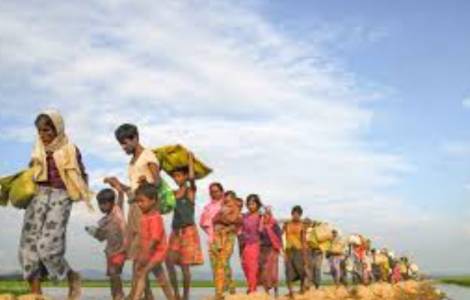
The consequences for Christians have been severe: places of worship have been attacked or closed, faithful have been killed or abducted, and entire communities have been forced to flee. A local source reported in 2025 that approximately 15,000 Catholics, out of an estimated community of 50,000, had abandoned their villages, particularly in the Tillabéri region. In some areas, priests can no longer reside permanently, and the life of local communities is entrusted to lay faithful, who lead the Liturgy of the Word.
Despite these difficulties, the Church continues to support the population. Caritas Niger, together with Catholic Relief Services and other organizations, assists internally displaced people and refugees, both Christian and Muslim, providing food, shelter and healthcare. Alongside its humanitarian commitment, the Church continues to promote interreligious dialogue.
Archbishop Laurent Djalwana Lompo of Niamey consistently calls on Christians and Muslims to recognize one another as “brothers in God and in humanity”. The Committee for Interreligious and Intrareligious Dialogue (CDIR) is also active in this field, bringing together representatives of different religious communities. It has already helped defuse tensions during the violence of 2015 (see Fides, 21/1/2015). The Church also promotes youth formation and takes part in regional peace initiatives.
Although Niger is not the country with the highest absolute number of Christian victims, the impact of violence is particularly severe in relation to the size of its Catholic community. The abandonment of villages and the loss of faithful risk undermining the Church's presence across entire areas of the country.
In a context marked by jihadism, poverty and humanitarian crisis, the Church continues to place its hopes in solidarity and interreligious dialogue, convinced that fraternity between Christians and Muslims is an essential path towards countering violence and building peace.
(AP) (Fides News Agency, 9/11/2026)