Information service of the Pontifical Mission Societies since 1927
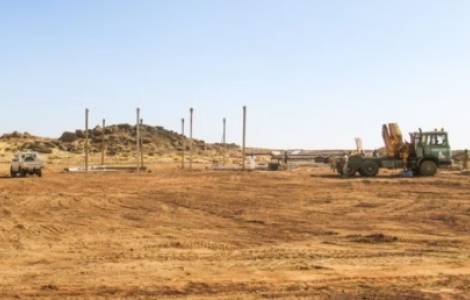
Niamey (Fides News Agency) – Niger’s military junta is seeking to relaunch the country’s uranium mining industry with the signing of an agreement with Australian company Atomic Eagle, through which the State of Niger has established the Madaouela Mining Company (MAMICO). The company, 60% owned by Atomic Eagle and 40% by the Nigerien State, plans to revive uranium mining operations in Agadez, in the central-northern part of the country.
The agreement provides for an initial royalty payment of 10 million US dollars, as well as investments in local development and in strengthening the capacity of the mining administration. According to the Ministry of Mines, the project should also create around 1,000 jobs for young Nigeriens.
Madaouela has a resource of 52,843 tonnes of uranium oxide, an estimate based on exploration carried out by the previous licence holder, GoviEx Uranium Inc., which obtained the licence in 2016.
The agreement settles the dispute that arose following the expropriation of the project from GoviEx in 2024. GoviEx and Tombador Iron merged in November 2025, creating Atomic Eagle. Under the agreement reached, the new company will withdraw its arbitration proceedings within seven days of the signing of the agreement.
The pact signed with the Australian company came just days after Canadian mining company Global Atomic obtained approval from the Board of Directors of the US International Development Finance Corporation (DFC) for debt financing of up to 414.2 million US dollars for its Dasa uranium mine project, also in the Agadez region.
The Dasa deposit is operated by Société Minière de Dasa (SOMIDA), a Niger-based company 80% owned by Global Atomic and 20% by the Nigerien government. Discovered in 2010 and authorized in 2020, the deposit has been under mining activity since 2022, but its full development has been subject to several delays. The completion of the mine is now expected in the first half of 2028, with commissioning scheduled for the second half of the year.
Niger’s mining sector was historically dominated by French industry, first Areva and subsequently Orano. Niamey nationalized the local subsidiary amid deteriorating relations with France and closer ties with Russia. Orano, 90% owned by the French State, has launched several legal actions against Niger, accusing the authorities of confiscating its assets in the country.
Despite the Russian presence in the country and the insecurity caused by jihadist groups, Anglo-Saxon mining companies do not appear to be facing particular obstacles in investing in Niger’s uranium sector.
(L.M.) (Fides News Agency, 25/9/2026)